
Do you ever have the sensation that you or the environment around you is spinning?
You could be experiencing an episode of vertigo. Vertigo can be a debilitating condition that affects balance, coordination, and daily function. While vertigo may seem like a condition itself, it is actually a symptom of other issues involving the inner ear, cervical spine, or nervous system.
At The Spine & Health Center of New Jersey, we frequently help patients uncover the true source of their vertigo and guide them toward effective, conservative treatment options.
Common Causes of Vertigo
Benign Paroxysmal Positional Vertigo (BPPV)
The most common form of vertigo. BPPV occurs when tiny calcium carbonate crystals (canaliths) become dislodged from their normal position in the inner ear. This disrupts fluid flow and sends incorrect balance signals to the brain.
Vestibular Neuritis (Labyrinthitis)
Inflammation of the vestibular nerve, a branch of the vestibulocochlear nerve responsible for transmitting balance and spatial orientation information to the brain.
Cervicogenic Vertigo
Dizziness that originates from neck dysfunction, often related to spinal misalignments, joint restriction, or muscle tension in the cervical spine. Symptoms may include neck pain, stiffness, and reduced range of motion.
Ménière’s Disease
A disorder of the inner ear that can cause vertigo, tinnitus, hearing loss, and a sensation of fullness or pressure in the ear. It is not directly related to fluid imbalance alone.
At SHC, we focus on identifying the root cause of vertigo and using targeted spinal care and specialized maneuvers to address the underlying dysfunction.
Chiropractic Adjustments and Vertigo Relief
Our chiropractors at The Spine & Health Center play an important role in managing—and in many cases improving—vertigo symptoms. Here’s how chiropractic care may help:
1. Correcting Spinal Misalignments
When the cervical spine (neck) is misaligned, communication between the brain and body can be disrupted. This may interfere with the vestibular system, which controls balance and spatial awareness.
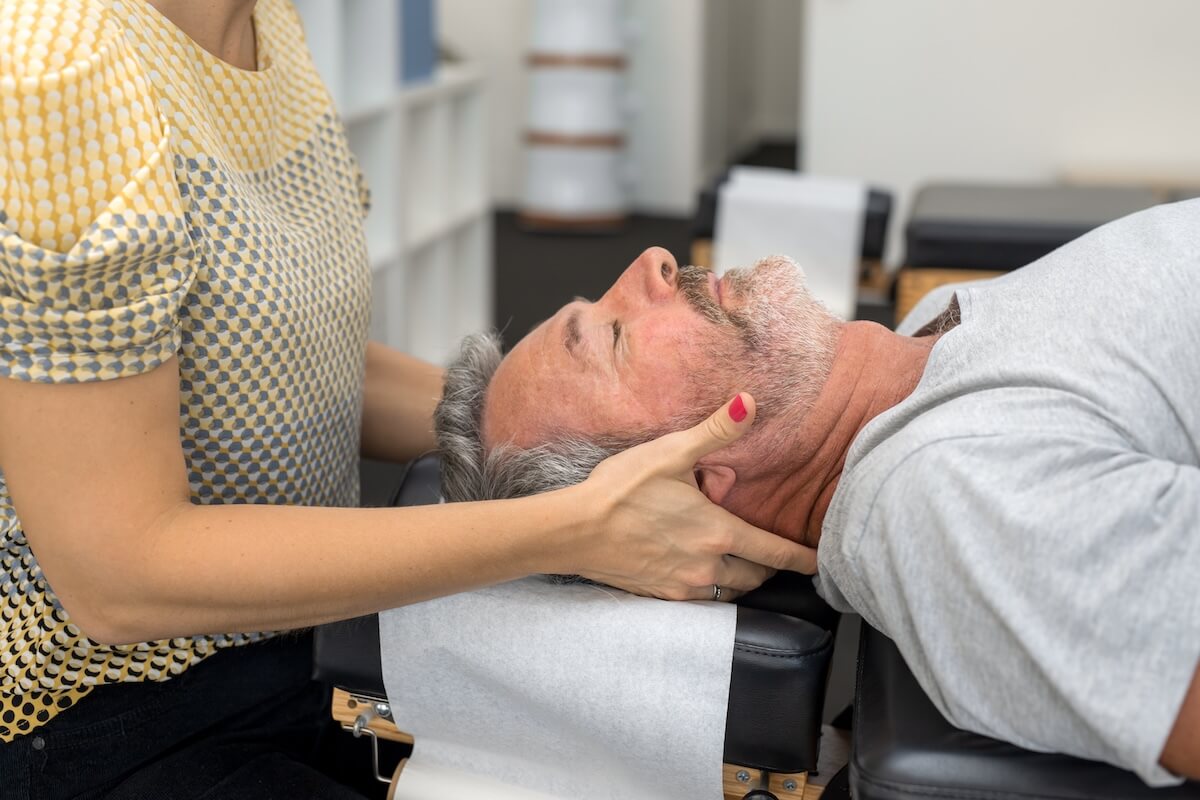
Through gentle cervical spinal adjustments, proper joint alignment can be restored, helping normalize nerve function and reduce vertigo symptoms—especially in cases of cervicogenic vertigo.
2. Improving Blood Flow
Chiropractic adjustments can help improve circulation to structures surrounding the inner ear and brainstem. Improved blood flow supports inner ear function and may help canaliths return to their proper location within the utricle.
3. Vestibular Rehabilitation Techniques
Some of our providers are trained in vestibular repositioning techniques such as the Epley Maneuver. This specific positional treatment carefully guides the head and body to move dislodged canaliths back into their proper location, often providing fast relief for patients with BPPV.
Many patients may also benefit from coordinated care with physical therapy for balance retraining and vestibular rehabilitation.
4. Postural and Lifestyle Corrections
Chiropractors also provide guidance on posture, ergonomics, and daily habits that support spinal health. Since the spine plays a critical role in communication between the brain and body, postural imbalances can contribute to vertigo symptoms.
Correcting these factors helps optimize nervous system function and reduce recurrence.
You Can Live a Well-Balanced Life
Most cases of vertigo—up to 80%—originate from the inner ear or vestibular nerve. With proper evaluation and conservative care, many patients experience significant improvement.
Our chiropractors and physical therapists at The Spine & Health Center of New Jersey work together to help manage and relieve vertigo symptoms so you can return to a stable, confident, and active life.