
Acupuncture in Bergen County, NJ — Integrated With Chiropractic & Physical Therapy
Most acupuncture in Bergen County happens in standalone studios — you get needles, and that’s the visit. At The Spine and Health Center of New Jersey, acupuncture works differently: it’s one tool inside an integrated clinic where licensed acupuncture providers, chiropractors, and Doctors of Physical Therapy treat the same patient, share the same chart, and build one coordinated plan. For chronic back pain, neck tension, sciatica, headaches, stress, and recovery — that integration is often the difference between temporary relief and lasting change.
We offer acupuncture at all three of our Bergen County offices — Closter, Montvale, and Park Ridge — with same-week appointments typically available. Below: how acupuncture works, the conditions it helps most, an honest look at the evidence, and what your first visit looks like.
What Is Acupuncture — and How Does It Actually Work?
Acupuncture is the practice of inserting very fine, sterile, single-use needles into specific points on the body to stimulate a therapeutic response. It’s one of the oldest continuously practiced treatments in the world — rooted in Traditional Chinese Medicine (TCM), which maps the body’s energy pathways, and now studied extensively through a modern clinical lens.
The modern physiological explanation: needling stimulates sensory nerves in skin and muscle, which triggers measurable responses — endorphin and enkephalin release (the body’s own painkillers), local blood-flow changes, muscle relaxation around trigger points, and modulation of pain signaling in the spinal cord and brain. Functional MRI studies show acupuncture changes activity in pain-processing regions of the brain.
You don’t have to choose between the traditional and the modern frame. What matters clinically: the needles are nearly painless, the response is real for many conditions, and the practice is exceptionally safe in licensed hands.
Acupuncture + Chiropractic + Physical Therapy: Why Integration Beats Isolation
Search “acupuncture near me” and you’ll find studios that do one thing. That works fine for some patients. But chronic musculoskeletal pain is rarely a one-tool problem:
- A patient with chronic low back pain might need acupuncture for pain modulation, chiropractic care for joint restriction, and targeted exercise to keep the change.
- A patient with tension headaches might need acupuncture plus hands-on myofascial release for the trigger points feeding the pattern.
- A post-injury athlete might pair acupuncture with physical therapy progressions and Class IV laser therapy for tissue recovery.
Under one roof, those aren’t three separate clinics with three separate opinions — they’re one care team adjusting one plan visit by visit. That’s the practical reason patients searching for “acupuncture and chiropractor near me” end up here: we’re built for exactly that combination.
Conditions We Treat With Acupuncture
Back Pain and Lower Back Pain
Neck Pain, Tension Headaches, and Migraines
Sciatica and Pinched Nerves
Peripheral Neuropathy
TMJ and Jaw Pain
Vertigo and Dizziness
Stress, Anxiety, and Sleep
One of the most common reasons patients try acupuncture — and the response is often immediate: most people leave a session in a measurably calmer state, and research links acupuncture to reduced cortisol and improved sleep quality. We’ve written a full evidence review on this: read Acupuncture for Stress & Anxiety: How It Actually Works.
Sports Injuries and Recovery
What to Expect at Your First Acupuncture Visit
-
History and Goals What hurts, what you've tried, medications, and what improvement would actually mean for you.
-
Examination Musculoskeletal assessment — because in an integrated clinic, the question isn't just “where do the needles go,” it's “is acupuncture the right lead tool for this problem, or a supporting one?”
-
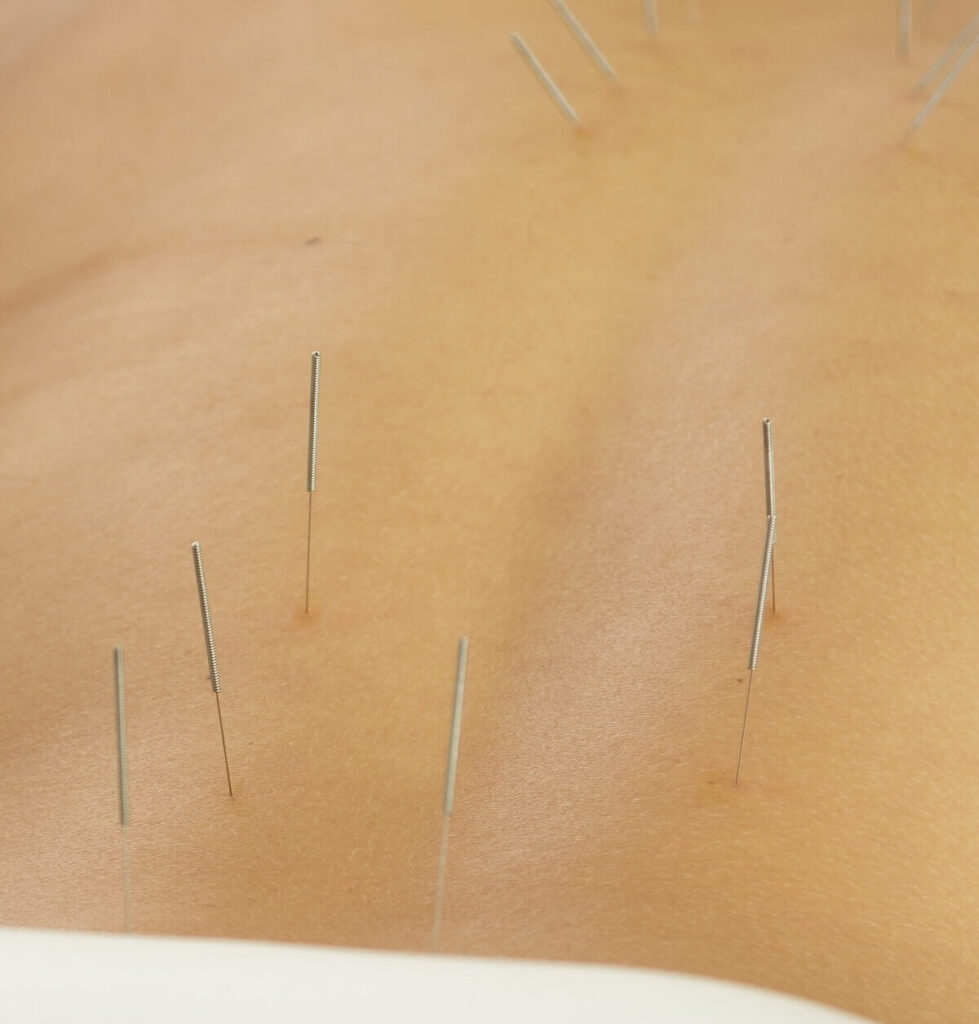
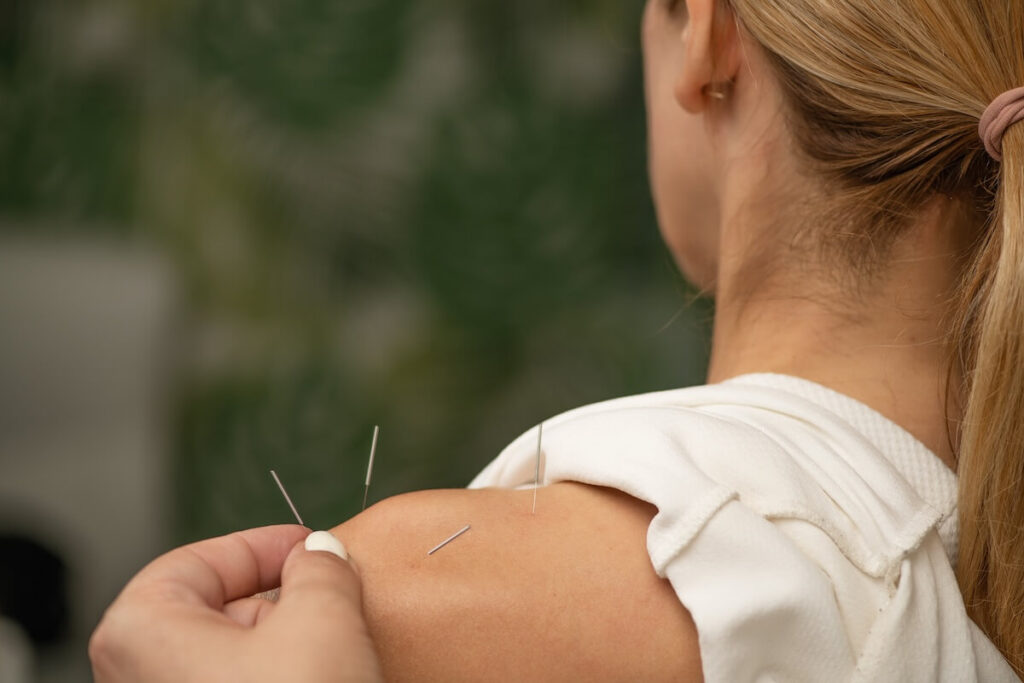
Treatment Typically 6-20 hair-thin needles placed at local and distal points. Most patients feel a brief tap, then nothing — or a dull, heavy sensation practitioners consider a good sign (de qi). You rest 20-30 minutes, lights low. Many patients fall asleep.
-
Plan Honest recommendations — frequency, expected timeline, and whether chiropractic or PT should run alongside.
The Benefits of Acupuncture — What Patients Actually Notice
- Natural healing and pain relief without adding another medication
- Lower baseline muscle tension — especially neck, shoulders, jaw, low back
- Calmer nervous system: better sleep, less reactivity, reduced stress load
- Faster recovery between workouts, treatments, or flare-ups
- A drug-free option that stacks safely with chiropractic, PT, laser, and massage care
- Very low side-effect profile compared to most pain interventions
Does Acupuncture Hurt?
Does Acupuncture Actually Work? An Honest Look at the Evidence
The research picture, stated plainly:
- Strongest evidence: chronic low back pain, tension headache and migraine prevention, neck pain, knee osteoarthritis, post-operative pain and nausea. Large meta-analyses (including the landmark Acupuncture Trialists’ Collaboration data on nearly 21,000 patients) show real effects beyond placebo for chronic pain.
- Promising but mixed: anxiety and stress physiology, sleep, some neuropathies, TMJ.
- Honest caveats: effect sizes vary between studies, some benefit likely comes from the ritual and rest of the session itself, and acupuncture is not a cure-all. Anyone who tells you it fixes everything is selling something.
Our standard is practical: we measure your response — pain scores, function, sleep, flare frequency — and tell you plainly whether it’s working. If it isn’t pulling weight in your plan after a fair trial, we say so and adjust. Read Healing Beyond the Scar: How Acupuncture Supports Post-Operative Scar Tissue Repair
How Many Sessions Will I Need?
- Acute issues (recent flare, post-injury): often 4-6 sessions over 2-3 weeks.
- Chronic pain patterns: typically 6-12 sessions, often weekly at first, then spaced out as response builds. Research on chronic pain shows benefits that persist long after a course ends.
- Stress/sleep support: many patients feel a shift in 1-3 sessions, then choose a maintenance rhythm.
We re-evaluate on a set schedule, not on autopilot. No open-ended plans.
Is Acupuncture Safe? Who Should Check First?
In licensed hands with sterile single-use needles, acupuncture is among the safest interventions in medicine — typical side effects are minor: brief soreness, occasional small bruise, post-session drowsiness. A few situations call for screening first:
- Bleeding disorders or blood-thinning medication (often still fine — points and depth get adjusted)
- Pacemakers or implanted electrical devices (relevant only if electro-stimulation is considered)
- Pregnancy (several points are avoided; tell us — many patients continue care safely)
- Active skin infection at a treatment area
- Severe needle phobia — we’ll be honest about whether this is the right tool for you rather than forcing it
Bring your medication list to the first visit; the screening takes minutes.
Acupuncture vs. Dry Needling vs. Massage: What's the Difference?
Acupuncture is a complete licensed discipline: point selection draws on both TCM frameworks and modern neuroanatomy, addressing pain, stress, and systemic patterns — delivered by providers trained specifically in it.
Dry needling is a narrower technique — needles into muscular trigger points only, usually by a PT, targeting local knots. Useful, but it’s one page of the book.
Massage and myofascial release work soft tissue by hand — broader contact, no needles, different mechanism. Our myofascial release program is often acupuncture’s best partner: needles calm the system; hands reorganize the tissue.
The integrated answer: you don’t have to pick blind. Your evaluation tells us which tool leads and which assists — and all of them live under our roof.
Why Choose The Spine and Health Center for Acupuncture in Bergen County
First, integration: acupuncture here is delivered alongside chiropractic, physical therapy, massage, laser therapy, and recovery care — one chart, one team, one coordinated plan. Solo studios can’t do that.
Second, honest tool selection: because we offer more than acupuncture, we have no incentive to oversell it. If needles aren’t the right lead for your case, we’ll say so and route you to what is.
Third, measurement: every plan has goals and re-evaluation points. You’ll always know whether it’s working.
Three Bergen County offices — Closter, Montvale, and Park Ridge — serving patients from Bergenfield, Emerson, Paramus, Westwood, Hillsdale, and across the county. Same-week appointments are typical.
Book Acupuncture in Closter, Montvale, or Park Ridge
If you’ve been thinking about acupuncture for pain, stress, or recovery — the easiest way to know if it’s right for your case is a proper evaluation by a team that offers more than one answer. Call any of our Bergen County offices or book online. Same-week appointments are typically available.