
When we think of surgery, we often focus on the procedure itself or the immediate recovery. But long after the stitches dissolve and the incision heals, many people are left with lingering issues—tightness, pain, and restricted movement caused by scar tissue.
As a result, many people seeking a natural, non-invasive method to support recovery are turning to acupuncture as a compelling option.
At The Spine & Health Center of New Jersey, we regularly work with post-operative patients who feel “healed” on the surface but still experience limitations beneath it.
Understanding Scar Tissue and Its Impact
Scar tissue is the body’s way of healing after injury or surgery. It forms as fibrous tissue that replaces normal skin or muscle tissue. While necessary, scar tissue does not function like the tissue it replaces.
- Restrict movement
- Trap or irritate nerves
- Reduce blood flow
- Contribute to chronic pain
- Affect posture and biomechanics
- Tightness around the incision
- Numbness or tingling
- Pain or sensitivity
- Limited range of motion
- Adhesions (internal scar tissue binding tissues together abnormally)
How Acupuncture Can Help Scar Tissue Recovery
1. Improved Circulation and Lymphatic Drainage
Scar tissue often has limited blood supply, which slows healing and increases stiffness. Specifically, acupuncture helps improve local microcirculation, delivering oxygen and nutrients to the affected tissues while also assisting lymphatic drainage.
This is especially helpful when scar tissue contributes to swelling or fluid retention and may complement care provided through occupational therapy when lymphatic involvement is present.
2. Reduction of Pain and Sensitivity
Scar tissue can irritate or entrap nearby nerves, leading to sharp, burning, or pulling sensations. Acupuncture helps calm the nervous system and supports the release of endorphins—your body’s natural pain-relieving chemicals.
This can reduce both localized scar sensitivity and referred pain patterns.
3. Supporting Adhesion Remodeling
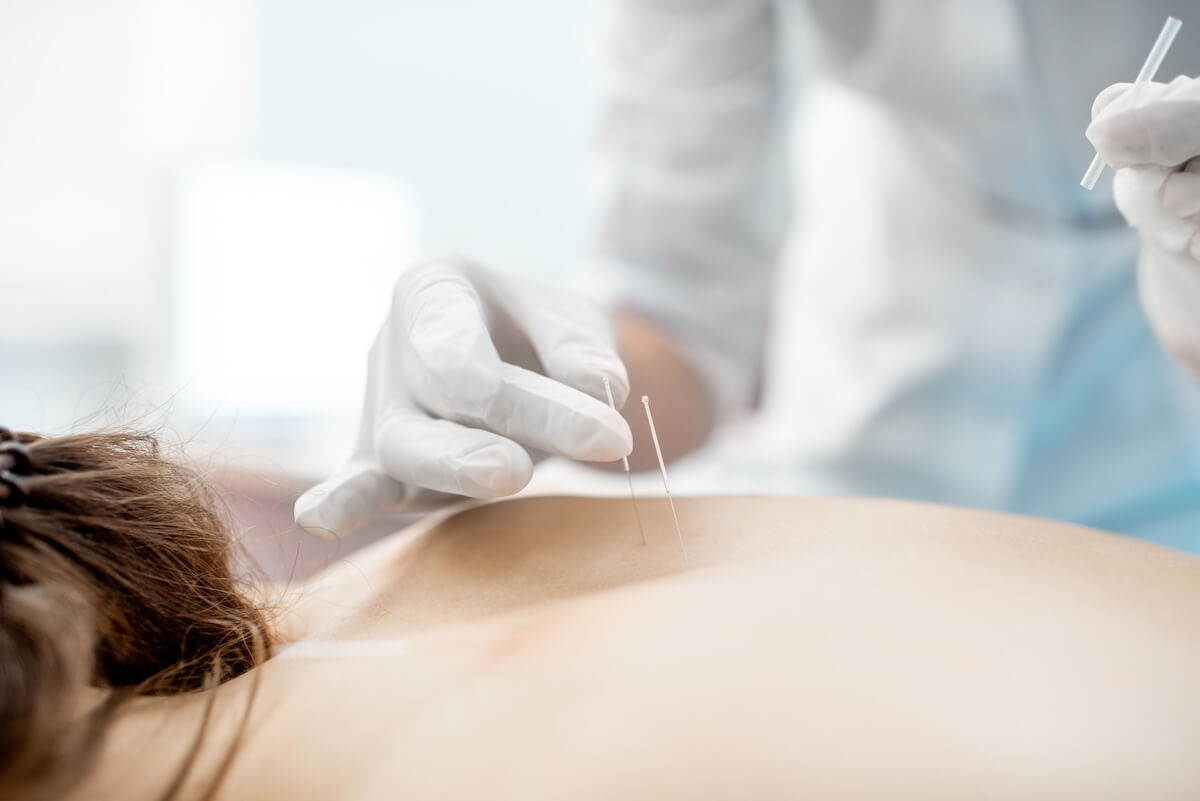
While acupuncture does not physically “break” scar tissue, it can encourage connective tissue remodeling. A commonly used technique known as “surround the dragon” involves placing needles around the scar to stimulate circulation and tissue pliability.
Over time, this can help reduce scar density and improve tissue glide — and in addition, outcomes improve further when paired with movement-based therapies like physical therapy.
4. Improving Tissue Elasticity and Mobility
By decreasing inflammation and improving fascial mobility, acupuncture can help restore normal movement around scar tissue. This is particularly beneficial following orthopedic, abdominal, or joint-related surgeries where scar restriction limits motion.
Patients often see improved outcomes when acupuncture is integrated with rehabilitative services focused on restoring strength and movement patterns.
5. Emotional and Nervous System Support
Scars can carry emotional weight, especially after traumatic injuries or difficult recoveries. In TCM, scars are viewed as disruptions in the body’s energy pathways (meridians).
Furthermore, acupuncture helps restore nervous system balance, which may support emotional regulation, stress reduction, and overall recovery.
Internal Scar Tissue and Abdominal Adhesions
What to Expect — and How Many Sessions
When to Start Acupuncture
Frequently Asked Questions: Acupuncture for Scar Tissue
Can acupuncture break up scar tissue?
Does acupuncture help scars after surgery?
Can acupuncture help internal scar tissue or abdominal adhesions?
How many acupuncture sessions will I need for scar tissue?
Is it safe to get acupuncture over a surgical scar?
Interested in Acupuncture for Scar Tissue?
Our licensed acupuncturists work collaboratively with rehabilitation providers at The Spine & Health Center of New Jersey to support healing beyond the incision.
If you’re dealing with lingering tightness, pain, or movement limitations after surgery, acupuncture may be an effective next step.
- Closter: 31 Vervalen St, Closter, NJ 07624
- Park Ridge: 146 Kinderkamack Rd, Park Ridge, NJ 07656
- Montvale: 32 Philips Pkwy, Montvale, NJ 07645
Talk to someone about your case
This article is general information, not a diagnosis. If what you have been reading sounds like your situation, the useful next step is an in-person evaluation so someone can examine you and tell you what is actually going on. We see patients at three Bergen County offices: Montvale, Closter, and Park Ridge. Choose the location that is most convenient for you to learn more or request an appointment.