
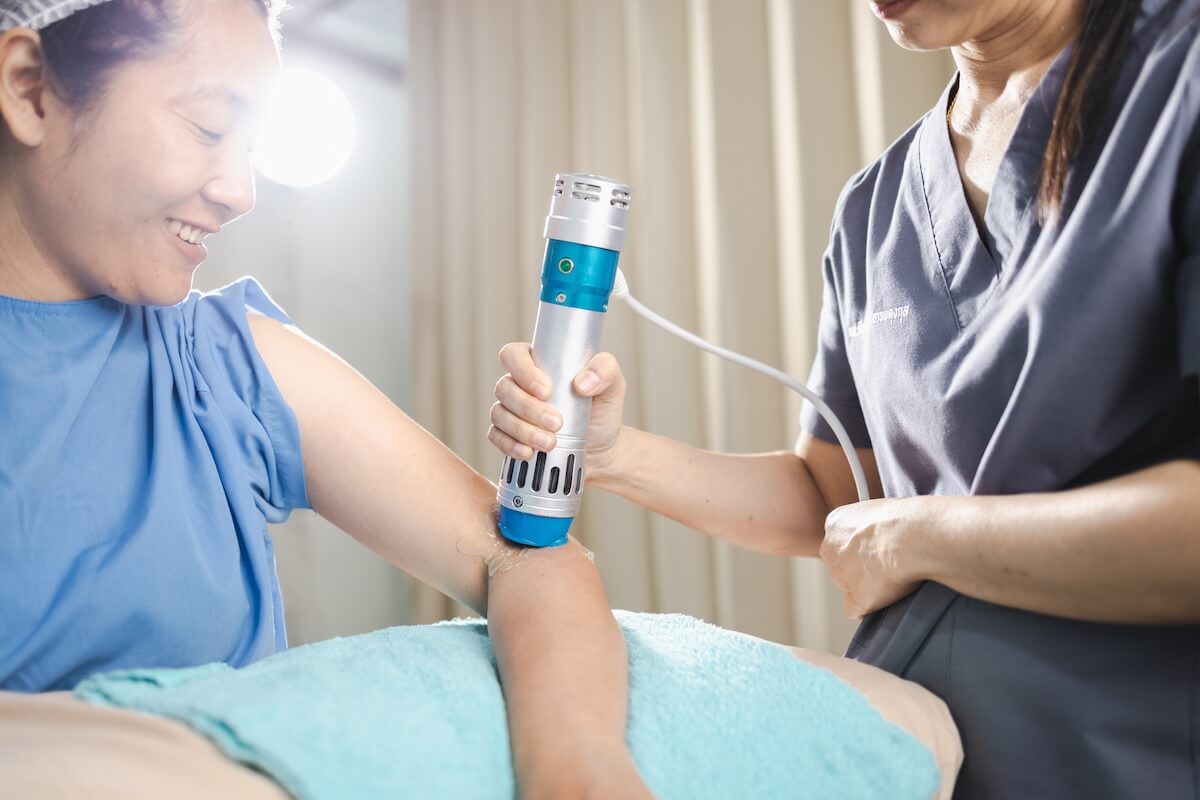
If you or someone you know has dealt with stubborn musculoskeletal pain, you’ve probably heard about shockwave therapy. Officially known as Extracorporeal Shock Wave Therapy (ESWT), this innovative treatment uses acoustic sound waves to stimulate healing in injured tissues. Unlike medications or invasive procedures, ESWT offers a non-surgical option to kickstart the body’s own repair mechanisms.
At The Spine & Health Center of New Jersey, shockwave therapy is used as part of an integrated approach to treating chronic pain and soft tissue injuries.
The effectiveness of shockwave therapy is backed by a growing body of published clinical research. Multiple high-quality studies show that ESWT is especially effective for chronic conditions that haven’t responded to traditional treatment.
One of the best-supported uses of shockwave therapy is in the treatment of plantar fasciitis—chronic heel pain—where patients often report significant relief and improved function. Similarly, tendinopathies such as Achilles tendinitis, calcific tendonitis of the shoulder, tennis elbow, and patellar tendinopathy respond favorably to this approach. Clinical trials and systematic reviews consistently demonstrate reduced pain and improved mobility after a series of shockwave sessions. There is also promising evidence for myofascial pain syndrome and certain cases of chronic low back pain.
But who benefits most from ESWT? Patients with lingering, non-healing soft tissue injuries are often excellent candidates. If conservative treatments such as rest, exercise, manual therapy, or physical therapy have not produced lasting results, shockwave therapy may help restart the healing process.
Diagnoses that respond particularly well include plantar fasciitis, calcific tendinopathy, tennis elbow, and chronic muscular pain.
One of the most valuable aspects of shockwave therapy is how well it integrates into a comprehensive rehabilitation plan. Pairing ESWT with physical therapy can lead to greater improvements, especially when combined with targeted stretching, strengthening, and movement retraining. Research shows this combined approach can accelerate recovery and enhance long-term outcomes, particularly for stubborn tendon injuries.
Similarly, evidence suggests that combining shockwave therapy with acupuncture may further reduce pain, improve function, and decrease inflammation—most notably in conditions such as lateral epicondylitis (tennis elbow).
When coordinated with chiropractic care, shockwave therapy may also help improve joint mobility and reduce pain in chronic neck, back, and shoulder conditions by addressing both soft tissue and joint-related contributors to pain.
In summary, shockwave therapy has become a valuable tool in the management of chronic musculoskeletal pain. When combined with physical therapy, chiropractic care, or acupuncture, ESWT offers a multi-angle approach that helps patients heal more efficiently and return to daily activities with less pain and improved function.
References
Dedes V, Tzirogiannis K, Polikandrioti M, et al. Extracorporeal shockwave therapy for plantar fasciitis: A systematic review and meta-analysis. Foot Ankle Surg. 2022;28(1):12–20.
Mani-Babu S, Morrissey D, Waugh C, Screen H, Barton C. The effectiveness of extracorporeal shock wave therapy in lower limb tendinopathy: A systematic review. Am J Sports Med. 2015;43(3):752–761.
Sun J, Gao F, Wang Y, Lei D, Li Z. Therapeutic effect of extracorporeal shock wave therapy combined with acupuncture in lateral epicondylitis: A randomized controlled trial. Am J Phys Med Rehabil. 2018;97(3):174–180.
Speed C. A systematic review of shockwave therapies in soft tissue conditions. Br J Sports Med. 2014;48(21):1538–1542.
Gollwitzer H, Saxena A, DiDomenico L, et al. Effectiveness of focused shock wave therapy in chronic plantar fasciitis. J Bone Joint Surg Am. 2015;97(9):701–708.
Moya D, Ramón S, Schaden W, et al. The role of extracorporeal shockwave treatment in musculoskeletal disorders. J Bone Joint Surg Am. 2018;100(3):251–263.
Zhang Q, Li Y, Li X, et al. Effectiveness of shockwave therapy for musculoskeletal conditions: A meta-analysis. Sci Rep. 2022;12(1):14247.