
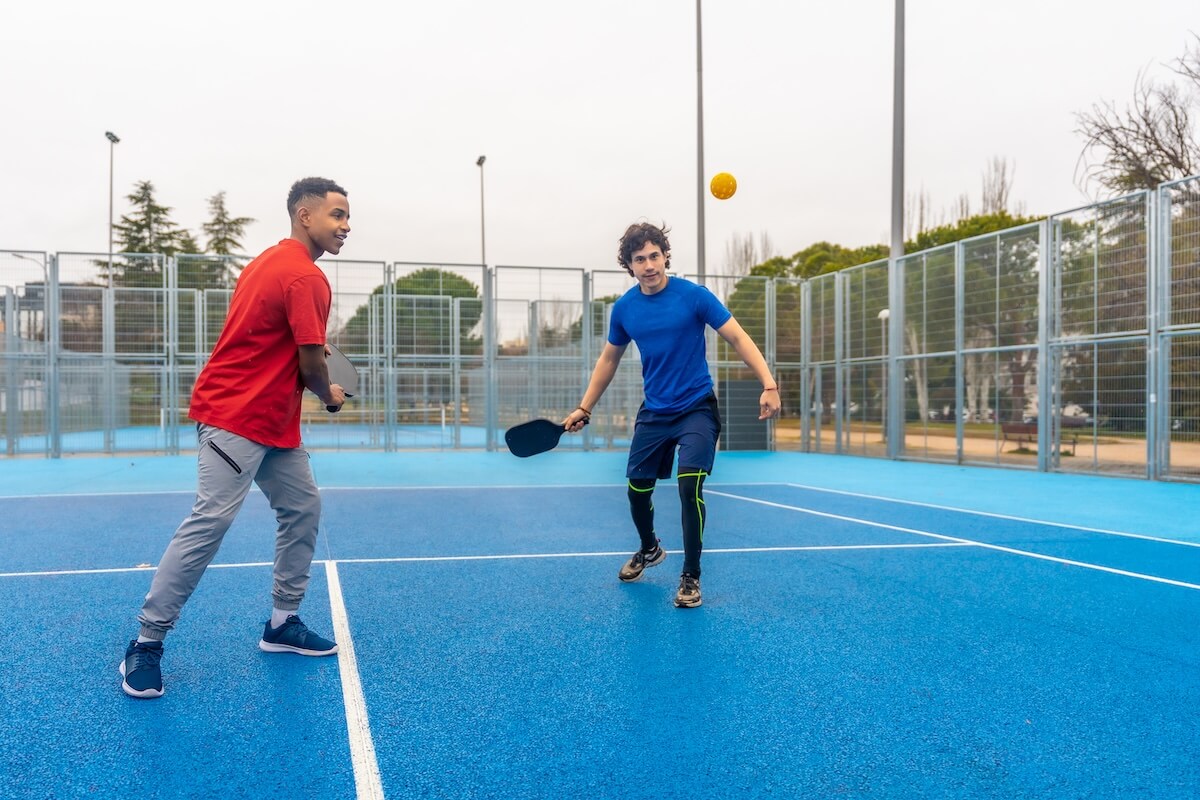
Pickleball injuries are the fastest-growing category of sports injuries treated at our Bergen County offices — and the trend shows no signs of slowing down. Whether you’re a weekend player at Overpeck Park or a competitive club member, the quick lateral movements, overhead smashes, and rapid direction changes that make pickleball so addictive are also what make it hard on your body.
In This Article:
Bergen County’s pickleball injury guide: what to expect
- Why pickleball injuries are surging
- The 7 most common pickleball injuries
- How to prevent pickleball injuries
- Beyond pickleball injuries: golf, youth sports, and Bergen County’s active lifestyle
- Should you see a chiropractor or physical therapist?
- Why a multidisciplinary clinic is the best approach to treating pickleball injuries
- Frequently asked questions
Treatment and Prevention: What Bergen County Players Need to Know
However, the good news is that most common pickleball injuries are highly treatable — and largely preventable. At The Spine & Health Center of New Jersey, our chiropractors and physical therapists work together to get pickleball players back on the court faster across our Closter, Park Ridge, and Montvale locations. As a result, this guide covers everything you need to know — from identifying each injury to building a prevention routine that actually works.Getting back on the court: how Bergen County players recover faster
Pickleball is now the fastest-growing sport in the United States, with participation exploding among adults aged 50 and older. The American Medical Association (AMA) reports that sports medicine clinics are seeing a corresponding surge in pickleball-related injuries, particularly among older populations who may be ramping up their level of activity too quickly.
How Sedentary Habits and Hard Courts Make Injuries More Likely
Specifically, the risk of injury increases when players who have been relatively sedentary jump into competitive play several times per week. The combination of quick movement patterns, repetitive overhead motions, and hard court surfaces creates a recipe for both acute injuries and overuse conditions.
Monthly U.S. searches for "pickleball injuries"
Of ER pickleball injuries affect adults 50 and older
Bergen County locations treating pickleball players
Notably, a study published in the JAMA Network documented the rising injury rates associated with pickleball’s popularity boom. The upper extremity, knees, and ankles account for the majority of injuries — many of which respond well to conservative chiropractic and physical therapy treatment.
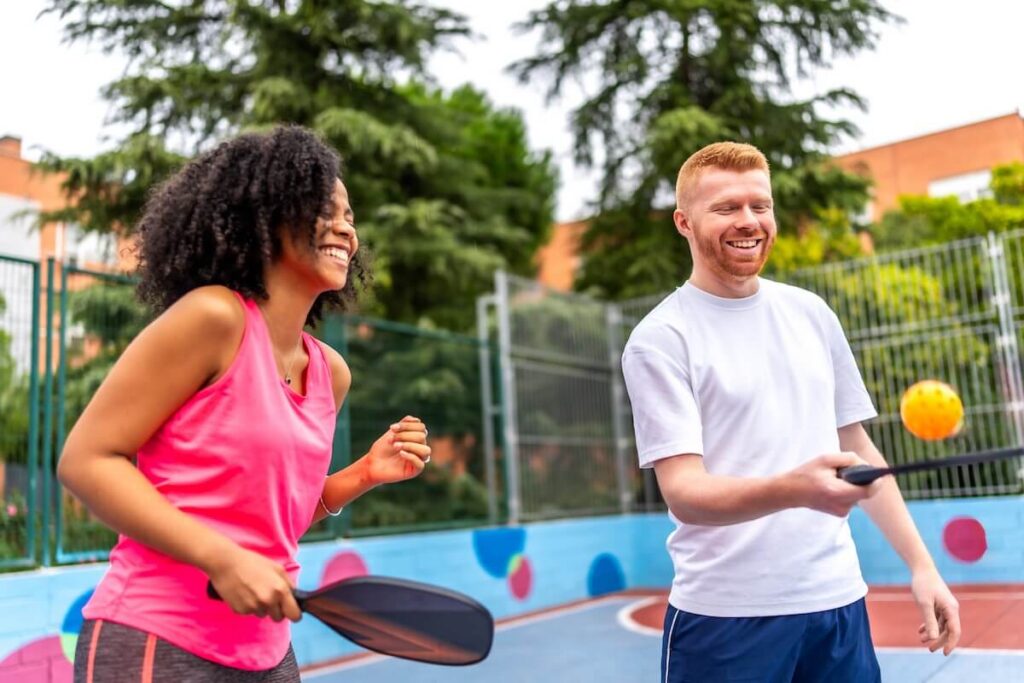
The 7 most common pickleball injuries
1. Shoulder strains and rotator cuff injuries — a top pickleball injury
Overhead smashes, dink volleys, and serve motions place enormous repetitive stress on the rotator cuff muscles. Over time, this leads to shoulder pain, inflammation, and even partial tears. Pickleball shoulder pain is especially common among players who played racquet sports like tennis or badminton earlier in life and carry pre-existing wear in those tendons. Our chiropractors use Active Release Technique (ART) and Graston Technique to break down adhesions in the rotator cuff and surrounding soft tissue. Subsequently, our physical therapists design progressive strengthening programs targeting the scapular stabilizers and rotator cuff to prevent recurrence.2. Pickleball elbow (lateral epicondylitis)
Formerly known as “tennis elbow,” this overuse condition has earned a new nickname among sports medicine professionals. Pickleball elbow results from repetitive gripping, wrist extension, and forearm rotation during play. In particular, players who use paddles that are too heavy or grip sizes that don’t match their hand are at elevated risk. Elbow pain treatment at our clinic combines FAKTR soft tissue mobilization with shockwave therapy to stimulate blood flow and tissue regeneration in the affected tendons. Importantly, we also evaluate the cervical spine, because nerve irritation from the neck can mimic or worsen elbow symptoms.3. Knee sprains and patellar tendinitis from pickleball
The lateral shuffling, sudden stops, and low-stance positioning required in pickleball place significant stress on the knee joint. Specifically, pickleball knee injuries range from mild patellar tendinitis (inflammation below the kneecap) to more serious ligament sprains. Players over 50 with pre-existing osteoarthritis are particularly vulnerable. Treatment typically includes chiropractic joint mobilization of the knee and ankle to restore proper mechanics, combined with PT-guided strengthening of the quadriceps, hamstrings, and hip abductors. Blood flow restriction (BFR) therapy is especially effective for knee rehabilitation because it builds muscle strength at lower loads — ideal for older adults and those with joint sensitivities.4. Ankle sprains from pickleball
The rapid direction changes inherent to pickleball make ankle sprains one of the most frequent acute injuries on the court. Fortunately, most ankle sprains respond well to conservative treatment. Our approach includes chiropractic ankle adjustments to restore joint mobility, followed by progressive PT balance and proprioception training to reduce re-injury risk. Above all, proper court shoes with lateral support are the single most important preventive measure. Running shoes — designed for forward motion only — significantly increase the risk of rolling an ankle during side-to-side movement.Explore: Foot & ankle specialist services at The Spine & Health Center
5. Achilles tendon injuries in pickleball players
The Achilles tendon absorbs tremendous force during the explosive push-off movements that pickleball demands. In older populations, the tendon becomes less elastic and more susceptible to strains and partial tears. Accordingly, Achilles injuries often develop gradually — players describe increasing stiffness and soreness at the back of the heel that worsens over weeks. Early treatment is critical. Class IV laser therapy reduces inflammation and accelerates cellular repair in the tendon, while eccentric loading exercises prescribed by our physical therapists progressively strengthen the tendon without overstressing it.6. Lower back pain: a common pickleball injury
The rotational forces generated during serves, returns, and overhead shots place considerable stress on the lumbar spine. Additionally, the low, crouched stance used during dinking rallies can aggravate existing back pain conditions. Lower back injuries from pickleball are particularly common among players who also spend long hours at a desk job. Our chiropractors address spinal misalignments and joint restrictions through targeted adjustments, while our physical therapists build core stability and lower back strength to support the spine during play. Spinal decompression therapy may also be recommended for players with disc-related symptoms.7. Wrist and hand pickleball injuries
Falls on an outstretched hand (FOOSH injuries) account for a significant portion of acute wrist and hand injuries in pickleball. Furthermore, repetitive wrist flexion and extension during paddle strokes can lead to tendinitis and carpal tunnel-like symptoms over time. Treatment combines chiropractic wrist and carpal bone mobilization with PT-guided grip strengthening and flexibility exercises. RockTape kinesiology taping can provide additional support during the return-to-play phase.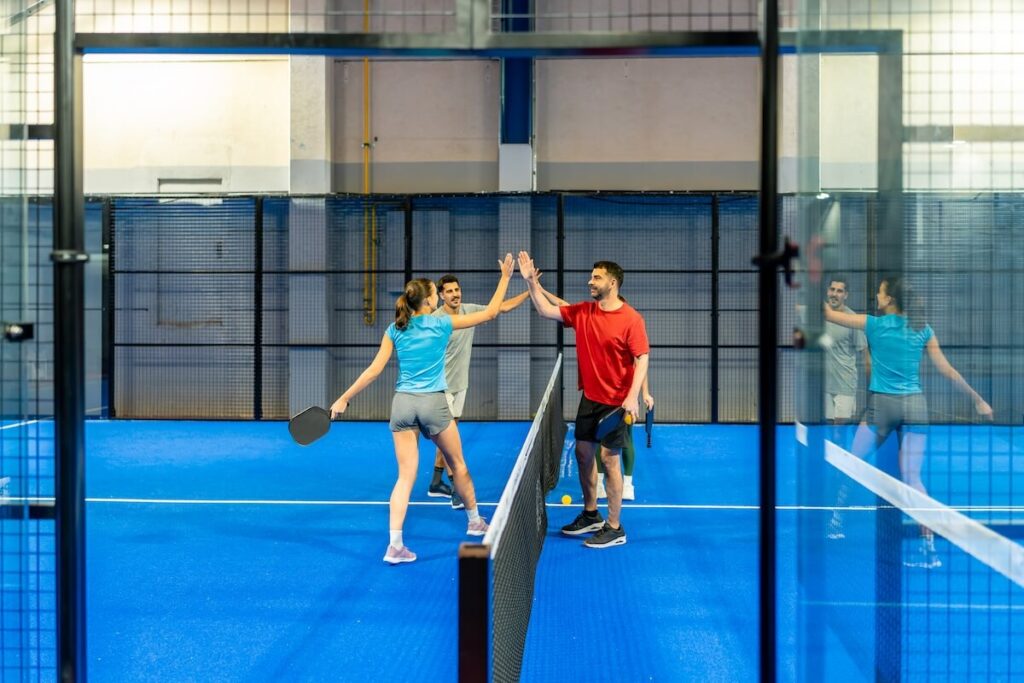
How to prevent pickleball injuries
Prevention is always more effective than treatment. The following strategies address the most significant risk factors for pickleball injuries, based on current sports medicine research.
Dynamic warm-up to prevent pickleball injuries
Spend 5–10 minutes performing leg swings, arm circles, lateral shuffles, and light jogging before playing. Static stretching alone is insufficient — your muscles and tendons need to move through their full range of motion at game-like speeds.
Court footwear and pickleball injury prevention
Wear shoes designed for lateral court sports — not running shoes, walking shoes, or cross-trainers. Court shoes provide the lateral stability your ankles need during side-to-side movements and quick direction changes.
Paddle fit and technique to avoid pickleball injuries
Choose a paddle weight that doesn’t strain your wrist or elbow during extended play. If you’re developing pickleball elbow symptoms, a lighter paddle and proper grip technique can reduce tendon stress significantly.
Off-court conditioning to reduce pickleball injury risk
Strengthen your rotator cuff, core, hip stabilizers, and calf muscles between playing sessions. Our sports performance programs build sport-specific conditioning that translates directly to injury prevention on the court.
Rest is part of the plan: One of the biggest risk factors for pickleball injuries is simply playing too much, too often, too soon. If you’re new to the sport or returning after a break, build up gradually. Two to three sessions per week with rest days between is a safer starting point than daily play.
Beyond pickleball injuries: golf, youth sports, and Bergen County's active lifestyle
Golf, lower back pain, and other sports injuries in Bergen County
The golf swing generates tremendous rotational force through the lumbar spine. Consequently, lower back pain from golf is the number one complaint among recreational golfers. Our Titleist Performance Institute (TPI) certified providers assess swing mechanics and physical limitations that contribute to golf-related injuries. Combining chiropractic spinal adjustments with TPI-based corrective exercises helps golfers stay active without sacrificing their back.Learn more: Sports performance and golf fitness programs
Youth sports injuries in Bergen County
Bergen County’s youth lacrosse, soccer, and basketball leagues are thriving — and so are overuse injuries in young athletes. Specifically, ACL injuries in young athletes have become alarmingly common, driven by early sport specialization and year-round training schedules. Growth plate injuries, stress fractures, and repetitive strain conditions also frequently present in our offices.
Our pediatric physical therapy and pediatric chiropractic teams specialize in age-appropriate evaluation and treatment. Additionally, the SFMA functional movement assessment identifies movement dysfunctions that increase injury risk — allowing us to intervene before a young athlete ends up on the sidelines.
The concussion connection
Contact sports remain a leading cause of post-concussion syndrome among Bergen County youth. Our vestibular rehabilitation and neurologic physical therapy programs support recovery through targeted visual, balance, and cognitive retraining. The neuroplasticity approach to concussion recovery that our team uses is grounded in current neuroscience research.
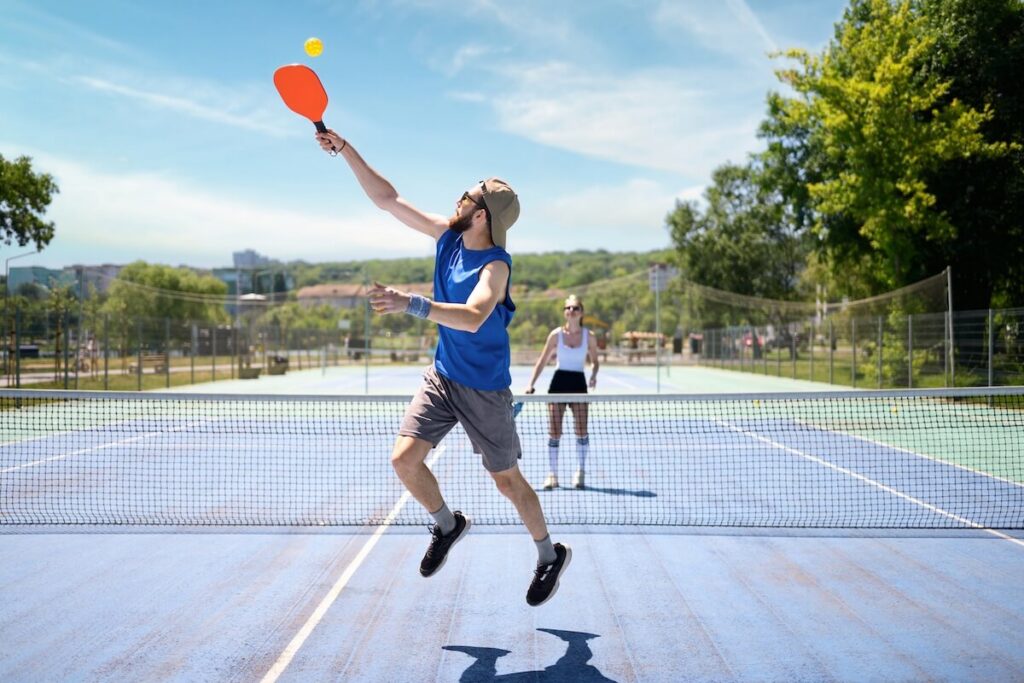
Should you see a chiropractor or physical therapist for a pickleball injury?
This is one of the most common questions our patients ask. As we explain in our detailed guide to chiropractic vs physical therapy, the answer often isn’t one or the other — it’s both.
| Injury type | Chiropractor | Physical therapist |
|---|---|---|
| Joint restrictions / stiffness | Primary — adjustments restore mobility | Supporting — exercises maintain gains |
| Muscle weakness / imbalance | Supporting — soft tissue work | Primary — progressive strengthening |
| Nerve-related pain (sciatica, radiculopathy) | Primary — spinal alignment reduces compression | Supporting — nerve glides and core work |
| Tendinitis (elbow, Achilles, patellar) | Both — ART, Graston, FAKTR | Both — eccentric loading, modalities |
| Post-surgical rehab | Supporting role | Primary — structured rehab protocol |
| Acute sprains (ankle, wrist) | Both — joint mobilization | Both — balance, proprioception, strength |
Why a multidisciplinary clinic is best for pickleball injuries
When your chiropractor and physical therapist share the same office, the same patient records, and the same treatment philosophy, your recovery plan is seamless. There’s no gap between diagnosis and rehabilitation, no conflicting advice, and no wasted visits.
Advanced treatment modalities for pickleball injuries
At The Spine & Health Center, we layer in advanced modalities at the right time to accelerate your return to the court:
Class IV laser therapy
Deep tissue photobiomodulation that reduces inflammation and pain. Particularly effective for tendon injuries like Achilles tendinitis and pickleball elbow.
Shockwave therapy
Acoustic wave technology that stimulates blood flow and tissue regeneration in chronic tendon conditions that haven't responded to other treatments.
Acupuncture
Targets pain relief and inflammation reduction while addressing the stress and anxiety that often accompany sports injuries.
Explore our toolkit: Laser | Shockwave | BFR | Cupping | NormaTec Boots | Fascial Manipulation | Trigenics
The American Physical Therapy Association (APTA) and the American Chiropractic Association (ACA) both recognize the value of multidisciplinary care for musculoskeletal conditions. Research from the National Institutes of Health (NIH) confirms that integrated treatment models produce better outcomes than single-provider approaches. The World Health Organization (WHO) also recommends coordinated musculoskeletal care as a public health priority.
Frequently asked questions about pickleball injuries
What are the most common pickleball injuries?
The most common pickleball injuries include shoulder strains from overhead shots, knee sprains from lateral movement, pickleball elbow (lateral epicondylitis), ankle sprains, Achilles tendon injuries, and lower back pain from rotational stress. Most of these develop gradually as overuse injuries rather than from a single traumatic event. Our sports injury team treats all of these conditions across our three Bergen County locations.
Should I see a chiropractor or physical therapist for a pickleball injury?
It depends on the injury. Chiropractors are ideal for joint restrictions, spinal misalignments, and nerve-related pain. Physical therapists excel at strengthening weak muscles, correcting movement patterns, and rehabilitating sprains. In most cases, a combined approach produces the fastest and most lasting results. Read our full chiropractic vs physical therapy guide for more detail.
How can I prevent pickleball injuries?
Effective prevention includes a dynamic warm-up before every session, wearing court-specific shoes with lateral support, strengthening your rotator cuff, core, and hip stabilizers between games, using a paddle weight that suits your wrist and elbow, and building playing frequency gradually. Our sports performance programs build sport-specific conditioning to reduce injury risk.
Is pickleball safe for seniors and older adults?
Pickleball can be safe and highly beneficial for seniors when played with appropriate precautions. The smaller court and slower ball speed make it more accessible than tennis. However, older adults face higher risk of fractures from falls and overuse injuries from increasing activity too quickly. A functional movement assessment before starting can identify risk factors. The Mayo Clinic recommends that older adults starting new sports activities consult their healthcare provider first.
Can chiropractic care help with pickleball elbow?
Yes. Chiropractors treat pickleball elbow using soft tissue techniques like Active Release Technique, Graston Technique, and FAKTR to break down scar tissue and restore normal function. Combined with physical therapy exercises to strengthen the forearm and improve grip mechanics, most cases resolve without surgery. Shockwave therapy may be added for chronic cases that haven’t responded to initial treatment.
What should I do immediately after a pickleball injury?
For acute injuries, follow the PRICE protocol: Protect the area from further damage, Rest from activity, Ice for 15–20 minutes every few hours, Compress with an elastic bandage, and Elevate the injured limb. If you cannot bear weight, notice significant swelling, or experience numbness or tingling, seek professional evaluation. You can book an evaluation at any of our three locations. The APTA’s ChoosePT resource also provides helpful guidance on managing acute sports injuries.
Don't let a pickleball injury keep you off the court.
Our Bergen County sports medicine team — chiropractors and physical therapists working together — will diagnose your injury, build a coordinated recovery plan, and get you back to playing the sport you love.
- Closter: 31 Vervalen St, Closter, NJ 07624
- Park Ridge: 146 Kinderkamack Rd, Park Ridge, NJ 07656
- Montvale: 32 Philips Pkwy, Montvale, NJ 07645
Disclaimer: This blog post is for informational purposes only and does not constitute medical advice. If you are experiencing pain or have sustained a sports injury, consult a qualified healthcare professional for a personalized evaluation. In New Jersey, you can see a chiropractor without a referral, and direct access to physical therapy is available for evaluation and initial treatment.