
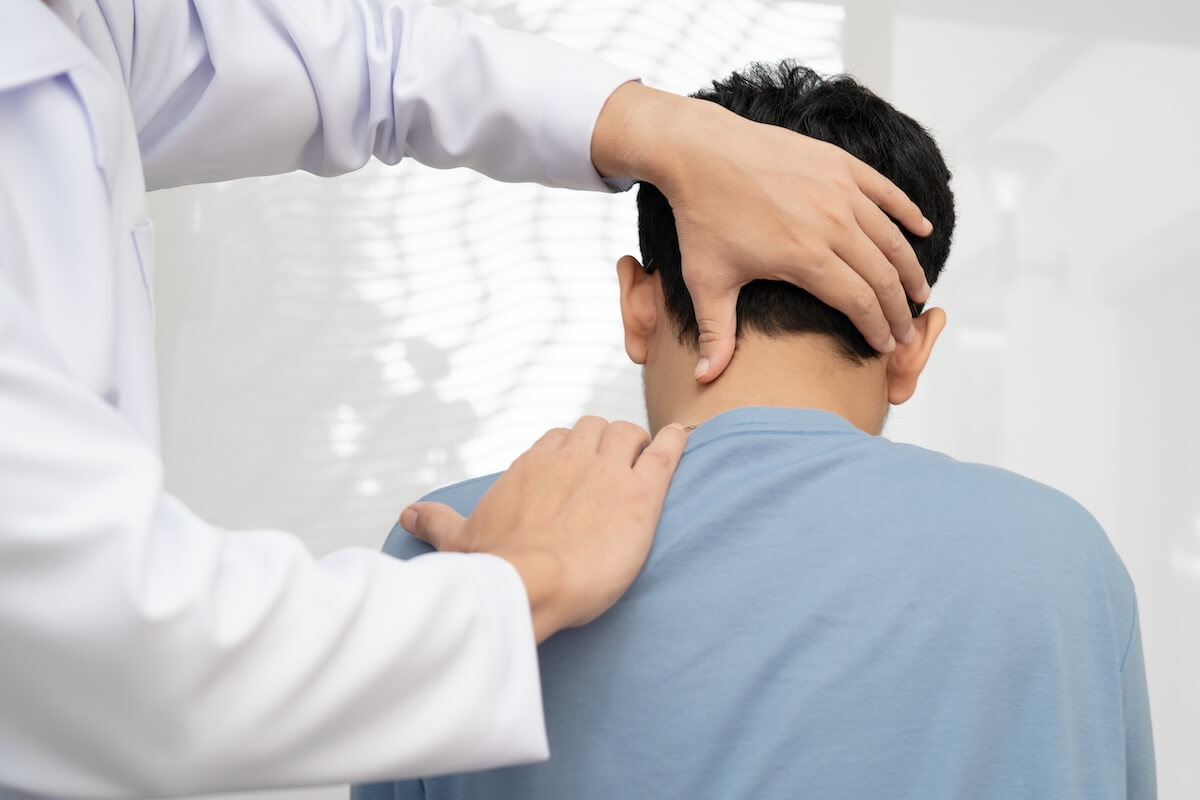
Written by Dr. Corey Schlanger, DC, Director of Chiropractic at our Park Ridge office.
Not all headaches come from your head. Sometimes they come from your neck. If headache medication is not helping and you also feel neck pain or stiffness, you may be dealing with a cervicogenic headache. This article explains the causes, symptoms and evidence-based treatment options.
The short answer
A cervicogenic headache is head pain that is referred from the neck: from irritated muscles, joints or discs of the cervical spine. It is usually felt on one side of the head and comes with reduced neck motion, pain when moving the neck and tight neck muscles. Conservative care is the usual first approach: spinal adjustments, mobilization of the neck joints, cervical traction, acupuncture and manual therapy, combined with posture and deep neck strengthening exercises.
What is a cervicogenic headache?
A cervicogenic headache happens when the muscles, joints or discs of the cervical (neck) spine refer pain into the head, mimicking a typical headache. This referral develops when those tissues become irritated or damaged.
Common contributing factors include:
- Poor posture
- Prolonged static positions
- Repetitive movements
- Injury or trauma
- Stress
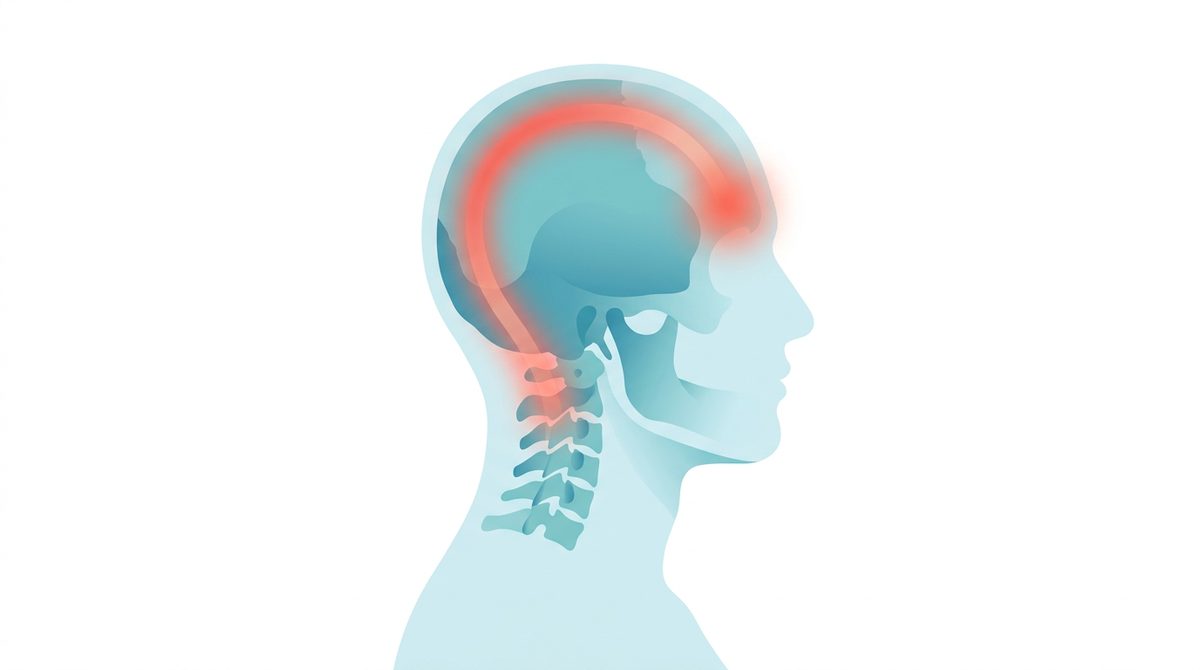
Cervicogenic headache symptoms
Cervicogenic headaches are typically felt on one side of the head and often come with:
- Decreased neck range of motion
- Pain with neck movement
- Tightness or guarding in the neck and upper shoulder muscles
Because these symptoms can overlap with other headache types, a thorough evaluation is important to confirm where the headache is really coming from.
Cervicogenic headache treatment
Research supports several conservative treatments for cervicogenic headaches, including:
- Spinal adjustments
- Mobilization of the neck joints
- Cervical traction
- Acupuncture
- Manual therapy
These treatments are provided through chiropractic care and physical therapy, depending on what your evaluation shows.
Exercises for cervicogenic headaches
Exercise plays an important role in both treatment and prevention. Commonly prescribed exercises include:
- Postural correction exercises
- Strengthening the deep neck stabilizer muscles
- Stretching tight neck muscles
- Towel neck SNAGs (self-assisted neck mobilizations using a towel)
Your provider will show you which exercises suit you and how to do them safely.
Everyday habits that help
- Avoid staying in one position for long periods
- Set up your workstation with good ergonomics
- Manage stress
These habits reduce strain on the neck and help keep headaches from coming back.
Frequently asked questions
How do I know if my headache is coming from my neck?
Clues include a headache on one side of the head, neck pain or stiffness, reduced neck motion, and pain that changes when you move your neck. An evaluation by a qualified provider confirms it.
Can a chiropractor help cervicogenic headaches?
Spinal adjustments and mobilization of the neck joints are among the conservative treatments supported by research for cervicogenic headaches, usually combined with exercise and posture work.
Why isn’t my headache medication working?
If the source of the pain is the neck, treating only the head pain may not address the cause. That is one sign it is worth checking whether your headache is cervicogenic.
Can cervicogenic headaches be treated?
Yes. A comprehensive approach that addresses joint mobility, muscle function, posture and nervous system involvement offers the best chance for lasting relief.
Headache and neck pain care in Bergen County
Cervicogenic headaches are treatable. If you have headaches with neck pain or stiffness, our team can evaluate whether you are a good candidate for cervicogenic headache care. Read more about head and neck pain treatment, or book an evaluation at our Park Ridge, Closter or Montvale office.
Research
- Jull G, Trott P, Potter H, et al. A randomized controlled trial of exercise and manipulative therapy for cervicogenic headache. Spine. 2002;27(17):1835-1843. doi:10.1097/00007632-200209010-00004
- Xu X, Ling Y. Comparative safety and efficacy of manual therapy interventions for cervicogenic headache: a systematic review and network meta-analysis. Frontiers in Neurology. 2025;16:1566764. doi:10.3389/fneur.2025.1566764
This article is for general education and is not medical advice. A sudden, severe or “worst ever” headache, or a headache with fever, a stiff neck, confusion, weakness or vision changes, needs emergency care.