
Shockwave Therapy Near Me in Bergen County, NJ
If you are searching for shockwave therapy near me in New Jersey, The Spine & Health Center provides advanced extracorporeal shockwave therapy (ESWT) at three convenient Bergen County locations in Closter, Park Ridge, and Montvale. Our licensed chiropractors and physical therapists use both radial shockwave therapy and focused shockwave therapy to treat chronic musculoskeletal pain, tendon injuries, and soft tissue conditions—without surgery, injections, or medication. As a result, thousands of patients across Bergen County trust us to help them move better and live pain-free.
What Is Shockwave Therapy (ESWT)?
Shockwave therapy, also known as extracorporeal shockwave therapy (ESWT) or EPAT shockwave therapy, is a non-invasive treatment that delivers high-energy acoustic pressure waves to injured or painful areas of the body. Specifically, these sound waves stimulate your body’s natural healing processes by increasing blood circulation, promoting collagen production, and breaking down scar tissue that may be restricting mobility. Consequently, the treatment accelerates tissue repair at the cellular level—offering a drug-free, surgery-free path to recovery.
At The Spine & Health Center, our clinicians are trained in both radial shockwave therapy and focused shockwave therapy. Radial shockwave therapy disperses energy over a broader area and works well for superficial tendon and muscle conditions, while focused shockwave therapy concentrates energy at a precise depth for deeper structures. Your provider will determine which type—or a combination—is best for your specific condition during your initial appointment.
Conditions We Treat With Shockwave Therapy
Plantar Fasciitis and Heel Pain
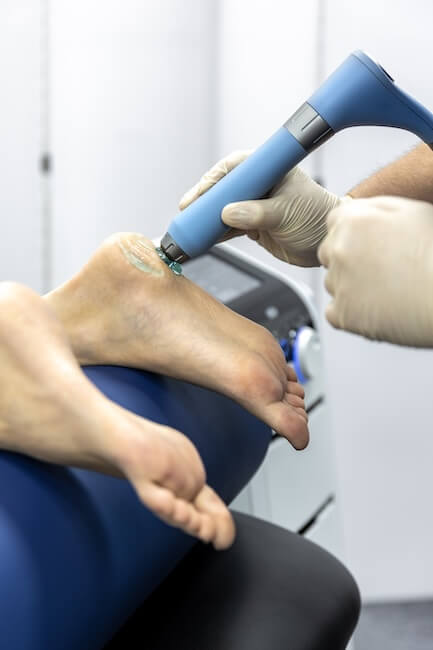
Plantar fasciitis treatment with shockwave therapy is one of the most well-researched applications of ESWT. The acoustic waves target the inflamed plantar fascia, stimulate blood flow, and promote tissue regeneration. Notably, this approach is especially effective for patients who have not responded to rest, orthotics, or stretching. We also treat heel spurs and foot and ankle pain using shockwave protocols tailored to each patient’s condition.
Tennis Elbow and Golfer’s Elbow
Shockwave therapy for tennis elbow (lateral epicondylitis) and golfer’s elbow (medial epicondylitis) works by delivering targeted acoustic waves to the damaged tendon fibers at the elbow. As a result, collagen remodeling accelerates and chronic inflammation diminishes—often within just a few sessions.
Shoulder Pain and Rotator Cuff Tendinopathy
Shockwave therapy for shoulder pain addresses calcific tendinitis, rotator cuff tendinopathy, and adhesive capsulitis (frozen shoulder). The focused energy dissolves calcium deposits and promotes tendon healing. Accordingly, patients often regain range of motion and experience significant pain reduction. Learn more about our approach to shoulder pain.
Achilles Tendonitis and Lower Leg Conditions
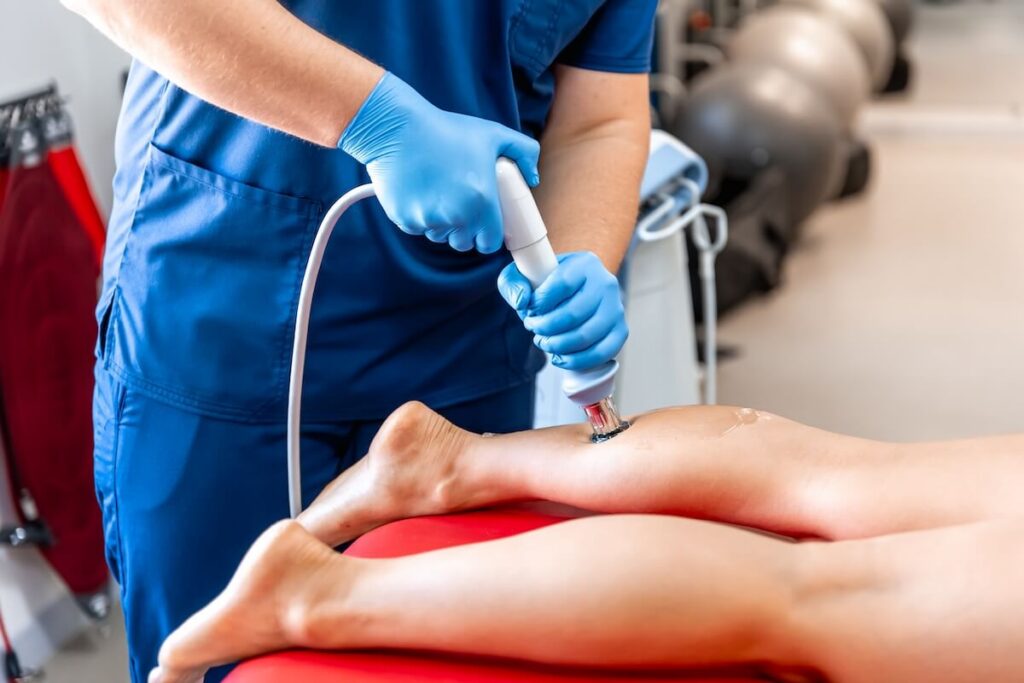
Shockwave therapy for achilles tendonitis targets the damaged tendon fibers to promote vascularization and tissue repair. Furthermore, we use ESWT to treat shin splints, calf tightness, and insertional tendinopathies that often affect runners and athletes. Our sports performance team integrates shockwave with rehabilitation exercises for comprehensive recovery.
Knee Pain and Hip Pain
Shockwave therapy for knee pain is effective for patellar tendinopathy (jumper’s knee), meniscus-related discomfort, and knee osteoarthritis. Similarly, we treat hip pain conditions including hip bursitis, gluteal tendinopathy, and greater trochanteric pain syndrome. In many cases, patients avoid the need for cortisone injections or surgical intervention.
Back Pain and Chronic Spinal Conditions
Shockwave therapy for back pain targets myofascial trigger points, chronic lumbar tension, and soft tissue restrictions that contribute to back pain. When combined with chiropractic care and physical therapy, ESWT can accelerate relief for patients suffering from chronic or recurring spinal discomfort. Additionally, shockwave can address sciatica-related soft tissue tightness and head and neck pain.
Additional Conditions
Beyond the conditions listed above, shockwave therapy is also effective for Morton’s neuroma, neuropathy, bone spurs, scar tissue adhesions, sports injuries, and personal injury recovery. Our providers evaluate each patient individually to determine whether ESWT is the right fit—or whether a complementary treatment such as Class IV laser therapy, Graston technique, or Active Release Technique (ART) may produce better results.
How Does Shockwave Therapy Work?
Neovascularization: New blood vessels form in the treated tissue, improving oxygen and nutrient delivery to promote faster healing.
Collagen Synthesis: The body ramps up collagen production to repair damaged tendon and ligament fibers, restoring structural integrity.
Pain Modulation: Shockwave therapy stimulates nerve fibers in a way that reduces the transmission of pain signals and triggers the release of endorphins and other pain-inhibiting substances.
Scar Tissue Breakdown: Acoustic energy breaks apart fibrotic adhesions and calcifications that limit range of motion and perpetuate chronic pain cycles.
Each session typically lasts 15–20 minutes. Most patients require 3–6 sessions spaced one week apart, though your provider will customize the protocol based on the severity and chronicity of your condition. There is no downtime—patients can return to their normal daily activities immediately after treatment.
Benefits of Shockwave Therapy
The shockwave therapy benefits that draw patients to our Bergen County offices include effectiveness, convenience, and safety. Specifically:
Non-Invasive and Drug-Free: ESWT requires no incisions, anesthesia, or pain medication. This makes it an ideal option for patients who want to avoid surgery or reduce dependence on NSAIDs and cortisone.
Fast, Measurable Results: Many patients experience noticeable pain relief after just one or two sessions, with continued improvement over the following weeks as tissue regeneration progresses.
Minimal Side Effects: Shockwave therapy side effects are generally mild and temporary—limited to slight redness, tenderness, or tingling at the treatment site that resolves within hours.
Accelerated Recovery: When integrated with physical therapy and chiropractic adjustments, ESWT can significantly shorten rehabilitation timelines compared to traditional methods alone.
Evidence-Based: Shockwave therapy is FDA-cleared and supported by extensive peer-reviewed research for conditions including plantar fasciitis, lateral epicondylitis, and calcific tendinitis.
Shockwave Therapy vs. Other Treatments
Patients frequently ask how shockwave therapy compares to cortisone injections, surgery, or traditional physical therapy alone. Here is a practical comparison:
Shockwave Therapy vs. Cortisone Injections: Cortisone provides temporary anti-inflammatory relief but does not promote tissue healing. In contrast, shockwave therapy stimulates actual cellular repair. Consequently, ESWT offers longer-lasting results without the risks of repeated steroid use, such as tendon weakening.
Shockwave Therapy vs. Surgery: Surgical intervention typically involves weeks of downtime and carries inherent risks including infection and scar tissue formation. Shockwave therapy achieves comparable outcomes for many chronic tendon conditions with zero downtime and minimal risk. For patients recovering from a procedure, our post-operative treatment programs can incorporate ESWT to accelerate rehabilitation.
Shockwave Therapy vs. Traditional PT Alone: Physical therapy remains a cornerstone of musculoskeletal rehabilitation. However, adding shockwave therapy to a physical therapy program can break through healing plateaus by targeting tissue at the cellular level. Our multidisciplinary approach combines both for optimal results.
What to Expect During Your Shockwave Therapy Session
Your first visit begins with a comprehensive evaluation by one of our licensed providers. During this assessment, we review your medical history, perform a physical examination, and identify the specific area of pain or dysfunction. Subsequently, your provider will explain whether radial shockwave therapy, focused shockwave therapy, or a combination approach is most appropriate.
During the session itself, you remain fully clothed (the treatment area is exposed). A coupling gel is applied, and the handheld applicator is moved over the affected area in a systematic pattern. You will feel a rapid tapping sensation—pressure and intensity are adjusted to your comfort level. Does shockwave therapy hurt? Most patients describe it as mildly uncomfortable during the session, but the sensation subsides immediately afterward.
After treatment, you may notice mild redness or warmth in the area. Importantly, you should avoid anti-inflammatory medications (such as ibuprofen) for 48–72 hours after each session, as the inflammatory response triggered by shockwave is part of the healing process. You can drive, walk, and return to normal activities right away.
Is Shockwave Therapy Safe? Understanding Side Effects and Contraindications
Shockwave therapy is FDA-cleared and has an excellent safety profile when administered by trained healthcare professionals. However, it is important to understand both the typical side effects and the contraindications.
Common shockwave therapy side effects include temporary redness, mild swelling, tingling, and localized tenderness at the treatment site. These resolve within hours to a few days. Serious complications are rare. Notably, the question “can shockwave therapy cause damage?” is one of the most frequently searched concerns. When performed by a licensed provider using appropriate settings, the risk of harm is extremely low.
Shockwave therapy contraindications include pregnancy, active infections at the treatment site, blood clotting disorders, and the presence of a pacemaker. Patients with open growth plates (children) or those taking anticoagulant medications should discuss their situation with their provider before beginning treatment. Your clinician at The Spine & Health Center will screen for all contraindications during your initial evaluation.
Shockwave Therapy Cost and Insurance Coverage
Shockwave therapy cost varies depending on the number of sessions needed and the specific condition being treated. At The Spine & Health Center, we work to make treatment accessible and transparent. During your first visit, our team will provide a clear breakdown of expected costs and treatment duration.
Is shockwave therapy covered by insurance? Coverage varies by plan and insurer. Some insurance providers cover ESWT for FDA-cleared indications like plantar fasciitis and tennis elbow, while others may consider it elective. Our insurance and billing team will verify your benefits and explain your options before treatment begins. We also accept various payment methods and can discuss flexible arrangements on a case-by-case basis.
Why Choose The Spine & Health Center for Shockwave Therapy in NJ?
When you search for shockwave therapy near me in Bergen County, you deserve a provider that combines clinical expertise with a genuinely patient-centered approach. Here is what sets The Spine & Health Center apart:
Multidisciplinary Team: Our staff includes licensed chiropractors, physical therapists, occupational therapists, and acupuncturists—all under one roof. This means your shockwave therapy can be seamlessly integrated with chiropractic adjustments, acupuncture, occupational therapy, or sports performance training for comprehensive care.
Advanced Technology: We invest in state-of-the-art radial and focused shockwave equipment to ensure precision, comfort, and optimal outcomes. Our technology is complemented by treatments like Class IV laser therapy, Normatec recovery boots, and blood flow restriction therapy.
Specialized Expertise: Our providers hold certifications in SFMA, Schroth Method, TPI Golf, FAKTR, and fascial manipulation—giving us the diagnostic and treatment depth to address even complex cases.
Three Convenient Bergen County Locations: Our offices in Closter, Park Ridge, and Montvale serve patients throughout Bergen County and surrounding areas, including Westwood, Hillsdale, Woodcliff Lake, Alpine, Englewood, Dumont, and Hackensack.
Proven Patient Outcomes: Don’t just take our word for it—read what our patients have to say in their video testimonials and patient reviews.
Shockwave Therapy Locations in Bergen County, NJ
Closter Office
Park Ridge Office
Montvale Office
Ready to find out if shockwave therapy is right for you? Contact us today or book online to schedule your evaluation at any of our three locations.
Frequently Asked Questions About Shockwave Therapy
How many sessions of shockwave therapy will I need?
Most patients require 3–6 sessions spaced about one week apart. However, the exact number depends on the severity of your condition and how your body responds. Your provider will create a personalized treatment plan during your first visit.
Does shockwave therapy hurt?
Most patients describe the sensation as a rapid tapping or mild discomfort during the session. Importantly, your provider can adjust the intensity to your comfort level. The sensation subsides immediately after treatment, and no anesthesia is required.
How long does it take to see results from shockwave therapy?
Many patients notice improvement after just one or two sessions. However, the full benefits of tissue regeneration typically develop over 6–12 weeks as collagen remodeling and neovascularization continue. Consequently, your provider may recommend periodic follow-ups to monitor progress.
Can shockwave therapy cause damage or make my condition worse?
When administered by a trained, licensed provider using appropriate protocols, shockwave therapy has an excellent safety profile. Temporary soreness or redness is normal and indicates the body’s healing response has been activated. Serious complications are extremely rare. Your provider screens for all contraindications before beginning treatment.
Is shockwave therapy covered by insurance?
Coverage varies by plan and condition. Some insurers cover ESWT for FDA-cleared indications such as plantar fasciitis and tennis elbow. Our insurance team can verify your benefits before your first session.
What is the difference between radial and focused shockwave therapy?
Radial shockwave therapy disperses energy across a wider surface area and is effective for superficial conditions like muscle tension and tendinopathy. In contrast, focused shockwave therapy concentrates energy at a specific depth, making it better suited for deeper structures and calcified deposits. Your provider will select the most appropriate type based on your diagnosis.
Can I combine shockwave therapy with other treatments?
Absolutely. In fact, our multidisciplinary approach is one of our greatest strengths. Shockwave therapy integrates well with chiropractic care, physical therapy, acupuncture, and soft tissue techniques like Graston and Trigenics. Your provider will design a comprehensive treatment plan tailored to your specific needs.
What should I avoid after shockwave therapy?
You should avoid taking anti-inflammatory medications (NSAIDs like ibuprofen or naproxen) for 48–72 hours after treatment, as the controlled inflammatory response is an essential part of healing. You can continue normal activities, walking, and driving immediately after your session.
Learn More About Shockwave Therapy
Explore our blog for in-depth articles on shockwave therapy and related topics:
Shockwave Therapy: A Modern Solution for Chronic Pain and Recovery — A detailed overview of how ESWT works, what to expect, and who can benefit.
Active Release Technique (ART): How It Works — Learn about a complementary soft tissue treatment often paired with shockwave.
Spinal Decompression Therapy — Another non-surgical approach for patients with disc-related back pain.
What to Expect After Spine Surgery: A Non-Invasive Recovery Roadmap — How shockwave therapy fits into post-operative recovery.
External Resources
For additional information on shockwave therapy research and standards, visit these authoritative sources:
National Institutes of Health (NIH) — Shockwave Therapy Research
American Physical Therapy Association (APTA)
Service Areas
We proudly serve patients seeking shockwave therapy near me from Closter, Park Ridge, Montvale, and throughout Bergen County, NJ, including Westwood, Hillsdale, Woodcliff Lake, Alpine, Englewood, Dumont, Hackensack, Oradell, River Vale, Old Tappan, Demarest, Cresskill, Northvale, and Harrington Park.