
Written by Dr. Juliana Schraer, PT, DPT, LSVT BIG, Doctor of Physical Therapy at our Park Ridge office.
Dizziness can feel like the room is spinning, like you might faint, like you are unsteady on your feet, or like you are moving when you are standing still. Many of these symptoms start in the vestibular system, the part of your inner ear and brain that controls balance, eye movements and your sense of where you are in space. Vestibular rehabilitation therapy (VRT) is a specialized form of physical therapy that helps your brain and body adapt and recover.
The short answer
Vestibular physical therapy is an exercise-based program that retrains how your brain processes balance signals. Depending on the cause of your dizziness, it can include gaze stabilization exercises, balance training, habituation exercises that reduce sensitivity to triggering movements, postural control training, and canalith repositioning maneuvers for BPPV (the most common cause of positional vertigo). The goal is less dizziness, steadier balance and more confidence in everyday movement.
What is dizziness?
Dizziness is a broad term. It can mean:
- A spinning sensation (vertigo)
- Lightheadedness
- Imbalance or unsteadiness
- A sense of motion when you are still
It often comes from the vestibular system. In some conditions, the fluid inside the inner ear’s semicircular canals moves abnormally and sends the brain incorrect signals about head position and motion, which disrupts your sense of balance and orientation.
How the inner ear controls balance
The vestibular system sits in the inner ear and includes:
- Semicircular canals: three fluid-filled canals (anterior, posterior and horizontal) positioned in different planes to detect head movement in every direction: up and down, side to side and rotation.
- Otolith organs (utricle and saccule): detect gravity and straight-line motion, such as moving forward or up and down.
- Vestibular nerve: carries balance information from the inner ear to the brain.
- Brain integration centers: process these signals to coordinate eye movements, posture and balance.
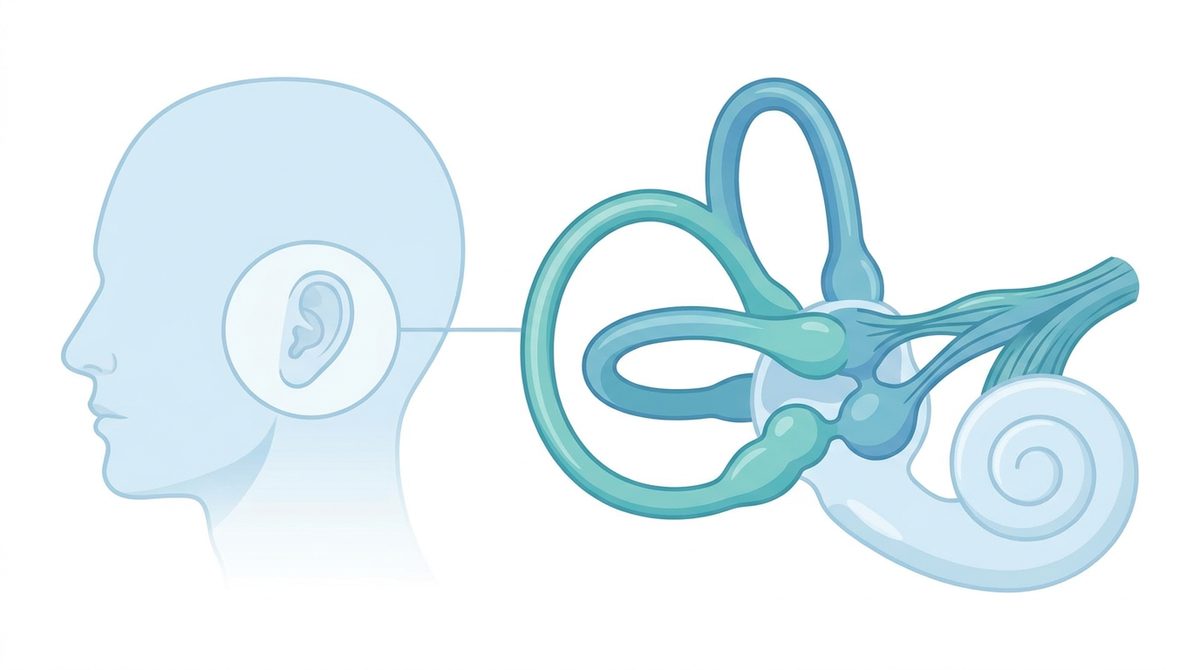
When any part of this system is disrupted, symptoms such as dizziness, vertigo and imbalance can occur.
Why balance depends on three systems
Balance relies on three systems working together:
- Vestibular system: detects head movement and position.
- Visual system: tells you about your surroundings and orients your body in space.
- Somatosensory (proprioceptive) system: feedback from muscles, joints and the feet about where your body is.
Your brain constantly combines these three sources to keep you steady when you stand, walk, turn and change position. When one system is impaired, such as the vestibular system, the brain must learn to rely more on the others. This is called sensory reweighting.
People with vestibular disorders often notice:
- Feeling unsteady or off balance
- Difficulty walking in the dark or on uneven surfaces
- More sway when standing
- Trouble in busy or visually stimulating places
- Higher risk of falls and fear of moving
How vestibular rehabilitation therapy helps
VRT is a specialized, exercise-based program designed to retrain your brain and body to adapt to vestibular problems. Your physical therapist chooses the parts that fit your diagnosis.
1. Gaze stabilization exercises
These improve your vision while your head is moving. For example, keeping your eyes on a target while you turn your head in different directions.
2. Balance training
Builds stability in different positions and environments, progressing from stable surfaces to unstable and real-world challenges.
3. Habituation exercises
Reduce dizziness through repeated, controlled exposure to the movements that trigger it, helping the brain “desensitize” to motion.
4. Postural control training
Improves alignment and coordination and strengthens your ability to stay upright and stable.
5. Canalith repositioning maneuvers
Used specifically for BPPV. These maneuvers safely guide displaced inner-ear crystals back to where they belong.
6. Functional integration
Brings the work into everyday life: walking in busy environments, turning your head while driving, bending, reaching and exercising.
Balance training is progressed safely so that it challenges these systems without putting you at risk, with the aim of better postural control, more confidence and fewer falls.
Common vestibular conditions we treat
- Benign paroxysmal positional vertigo (BPPV): brief spinning episodes triggered by head movement, caused by displaced inner-ear crystals. It typically resolves quickly with repositioning maneuvers.
- Unilateral or bilateral vestibular hypofunction: reduced function in one or both inner ears, causing imbalance, dizziness and trouble keeping vision steady during movement.
- Vestibular neuritis and labyrinthitis: inflammation of the vestibular nerve or inner ear that causes sudden vertigo, dizziness and imbalance. Labyrinthitis may also affect hearing.
- Persistent postural-perceptual dizziness (PPPD): long-lasting dizziness made worse by motion, standing upright or busy visual environments, often after a vestibular event.
- Post-concussion dizziness: dizziness after a head injury that affects the vestibular and visual systems, causing motion sensitivity, imbalance and difficulty focusing. See our page on physical therapy after concussion.
Learn more about the vestibular conditions we treat, or read how chiropractic care can help with some types of vertigo.
Frequently asked questions
Is vertigo the same as dizziness?
Vertigo is one type of dizziness: a spinning sensation. Dizziness can also mean lightheadedness, imbalance or a sense of motion when you are still.
Can physical therapy help vertigo?
Yes, for many vestibular causes. Vestibular rehabilitation uses gaze stabilization, balance, habituation and postural exercises, and for BPPV, repositioning maneuvers that guide displaced crystals back into place.
What is BPPV and how is it treated?
BPPV causes brief spinning episodes when you move your head, because tiny inner-ear crystals have moved out of place. It is treated with canalith repositioning maneuvers and typically resolves quickly.
Why am I unsteady in the dark or in busy places?
When the vestibular system is not working well, the brain leans more on vision and on feedback from your feet and joints. In the dark, on uneven ground or in visually busy places, that backup is harder to use, so balance feels worse.
Vestibular therapy in Bergen County
If dizziness, vertigo or unsteadiness is affecting your day, our physical therapists can evaluate the cause and build a program for you. Our neurologic physical therapy team treats balance and dizziness at our Park Ridge, Closter and Montvale offices.
This article is for general education and is not medical advice. Sudden severe dizziness with slurred speech, facial drooping, weakness, double vision or a severe headache can be a medical emergency: call 911.