
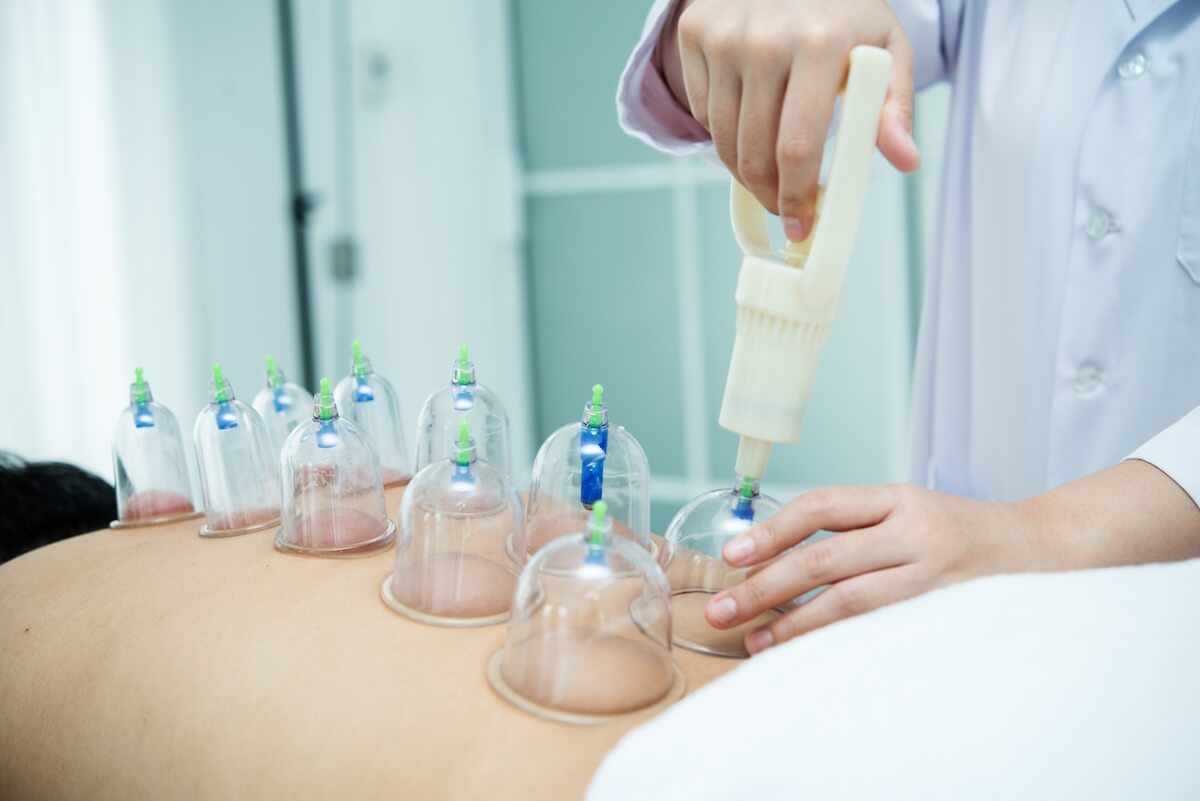
Cupping therapy benefits range from immediate pain relief and reduced muscle tension to improved circulation, faster recovery, and long-term gains in mobility — making it one of the most versatile soft tissue treatments available in modern rehabilitation. As a result, whether you’re an athlete managing training soreness, a desk worker battling chronic back pain, or a patient recovering from an injury, cupping therapy offers a drug-free, non-invasive path toward healing.
However, cupping delivers its best results as part of a coordinated treatment plan, not as a standalone service. That is why at The Spine & Health Center of New Jersey, our clinicians integrate cupping therapy with chiropractic care, physical therapy, and acupuncture across our Closter, Park Ridge, and Montvale offices — so patients receive cupping as part of a complete, multidisciplinary recovery strategy.
In This Article:
What is cupping therapy?
A Centuries-Old Practice, Now Used in Modern Rehabilitation
Cupping therapy is a soft tissue treatment that uses suction cups placed on the skin to create negative pressure, lifting the underlying tissue to promote blood flow, release fascial restrictions, and reduce muscle tension. It has been practiced for thousands of years across Chinese, Middle Eastern, and Greek medical traditions, and is now widely used in modern physical therapy, chiropractic care, and sports medicine.
How Cupping Differs From Traditional Massage
Specifically, the suction created during cupping decompresses the tissue rather than compressing it (as traditional massage does). This distinction matters because injury, overuse, and chronic posture patterns cause fascia and muscle layers to adhere together — and cupping decompression actively separates them. The National Center for Complementary and Integrative Health (NCCIH) recognizes cupping as a practice with growing research support for pain-related conditions.
How We Use Cupping at The Spine & Health Center
At The Spine & Health Center, cupping is performed by licensed providers — our chiropractors and physical therapists — who use it as one tool within a broader treatment plan. Specifically, our clinicians identify your problem areas during your evaluation and then target each cupping session to those areas — rather than applying it generically.
How cupping therapy works
Cupping therapy works by creating a vacuum inside medical-grade cups placed on the skin. This distinction matters because injury, overuse, and chronic posture patterns cause fascia and muscle layers to adhere together — and cupping decompression actively separates them. The tissue boosts local blood circulation, activates the lymphatic system, and reduces inflammation naturally.
The mechanism in three steps
First, the clinician places cups on targeted areas — typically over muscles, trigger points, or along fascial lines related to your pain pattern. Next, the clinician applies suction using a hand pump, silicone squeeze, or fire method depending on the technique. Finally, The clinician holds the negative pressure for 5 to 15 minutes, and the tissue responds by increasing blood flow and releasing fascial restrictions.
NIH-published research demonstrates that cupping produces measurable changes in local tissue oxygenation, pain thresholds, and range of motion.. Building on that evidence, a 2024 systematic review in Complementary Therapies in Medicine confirmed cupping’s effectiveness for chronic musculoskeletal pain when combined with conventional treatments.
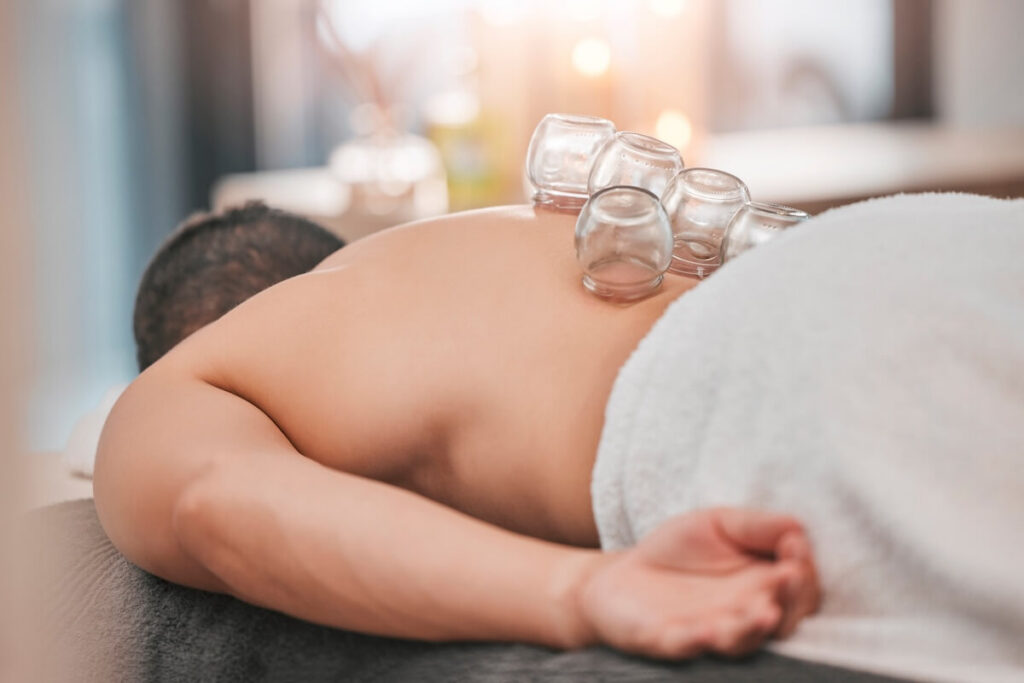
Cupping therapy benefits
Overview of Cupping Therapy Benefits
The benefits of cupping therapy extend across pain management, injury recovery, athletic performance, and chronic condition management. Specifically, below are the primary benefits supported by clinical research and observed in daily practice at our Bergen County clinics.
Improved Circulation and Pain Relief
Cupping therapy reduces pain by increasing blood flow to tight, inflamed, or injured tissue and by interrupting pain signaling pathways. For patients with chronic neck pain, shoulder tension, or persistent back pain, cupping provides targeted relief that often takes effect within a single session. Cupping addresses the muscular component of pain — including knots, trigger points, and compensatory tightness — that chiropractic adjustments alone may not fully reach.
The suction from cupping draws nutrient-rich blood into areas of stagnation, accelerating the delivery of oxygen and growth factors needed for tissue repair. Consequently, athletes and active patients use cupping to reduce delayed-onset muscle soreness (DOMS), speed recovery between training sessions, and maintain tissue quality during heavy training blocks. Our sports performance team frequently layers cupping with NormaTec compression boots and blood flow restriction (BFR) therapy for comprehensive recovery protocols.
Myofascial release and scar tissue reduction
Cupping is one of the most effective tools for myofascial release. The negative pressure separates fascial layers that have become adhered due to surgery, repetitive strain, or chronic inflammation. For patients recovering from post-operative procedures or dealing with scar tissue buildup, cupping therapy breaks down adhesions without the discomfort of aggressive manual techniques. Our team also uses acupuncture for scar tissue repair alongside cupping for enhanced results.
Reduced inflammation and lymphatic drainage
Cupping promotes lymphatic movement, helping the body clear inflammatory byproducts, excess fluid, and metabolic waste from injured areas. This is particularly beneficial for patients with swelling, edema, or conditions involving lymphatic system dysfunction. The decompressive action of cupping physically opens lymphatic channels that may be compressed by tight muscle or fascial tissue.
Monthly searches for "cupping therapy" in the U.S.
AI prompts asked about cupping therapy benefits
Bergen County locations offering cupping therapy
Cupping therapy for back pain and sciatica
Cupping therapy is one of the most commonly requested treatments for back pain and sciatica at our practice. It works by addressing the muscular and fascial components that contribute to spinal stiffness, nerve compression, and radiating leg pain.
For lower back pain, cupping targets the paraspinal muscles, quadratus lumborum, and gluteal muscles — the key muscle groups that tighten in response to lumbar dysfunction. By releasing these muscles, cupping creates an environment where chiropractic adjustments hold more effectively and physical therapy exercises produce faster strength gains.
For sciatica, cupping is applied along the piriformis muscle and posterior hip where the sciatic nerve can become compressed by tight tissue. A systematic review indexed in PubMed found that cupping combined with conventional therapy produced significantly greater pain reduction than conventional therapy alone for chronic low back pain.
The combined approach: At The Spine & Health Center, we typically sequence treatment as follows — chiropractic adjustments restore joint alignment, cupping releases the surrounding soft tissue, and physical therapy strengthens the stabilizing muscles. This three-phase model addresses the structural, fascial, and muscular contributors to back pain simultaneously.
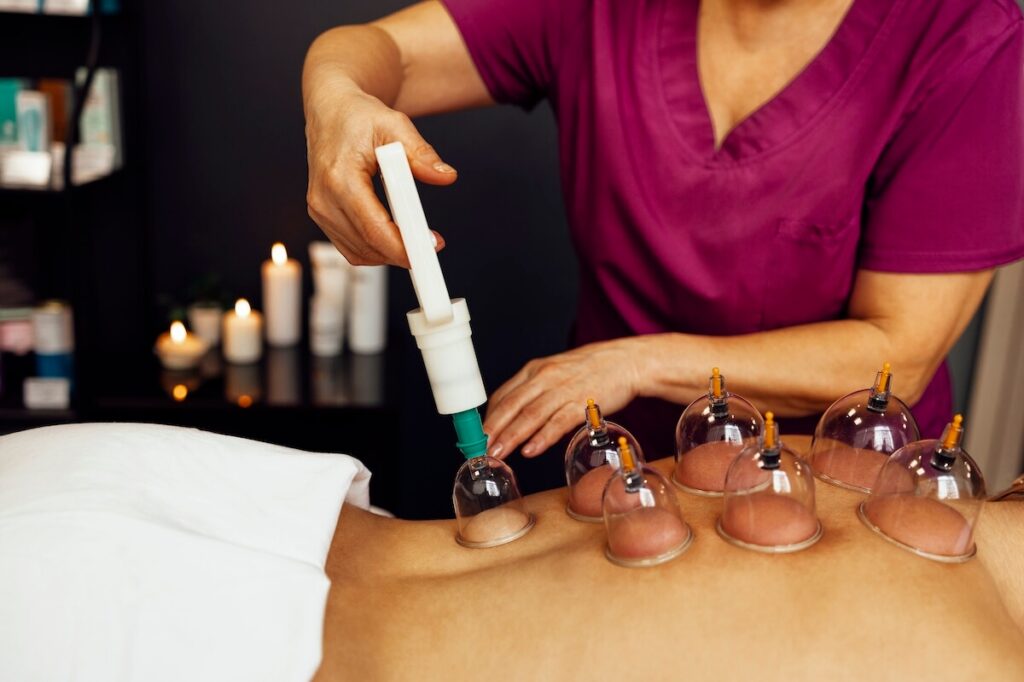
Types of cupping therapy
Not all cupping is the same. The type of cupping used depends on your condition, treatment goals, and provider assessment. Here are the main forms used in clinical practice:
Dry cupping (static)
Cups are placed on the skin and left stationary for 5–15 minutes. This is the most common form used in physical therapy and chiropractic settings. It is ideal for trigger points, chronic tension, and localized pain.
Sliding (dynamic) cupping
Oil is applied to the skin and cups are moved along muscle fibers and fascial lines. This technique covers larger areas and is particularly effective for broad myofascial restrictions, IT band tightness, and upper back tension.
Myofascial decompression
A modern clinical adaptation where cups are placed while the patient actively moves through specific ranges of motion. This is the technique most commonly used in sports rehabilitation because it restores functional movement patterns, not just passive tissue release.
Fire cupping
A traditional technique using glass cups and a brief flame to create suction. Fire cupping is often associated with acupuncture practices and traditional Chinese medicine. The therapeutic effect is similar to pump-based cupping, but the glass cups provide a different sensory experience.
At The Spine & Health Center, our providers primarily use dry cupping and myofascial decompression because these techniques integrate most effectively with chiropractic adjustments and progressive physical therapy programs. The Cleveland Clinic provides additional detail on cupping variations and their clinical applications.
What to expect: marks, aftercare, and side effects
Understanding what happens during and after a cupping session helps patients approach treatment with realistic expectations. Cupping therapy is safe when performed by a trained provider, and the after-effects are well understood.
What do the cupping marks mean?
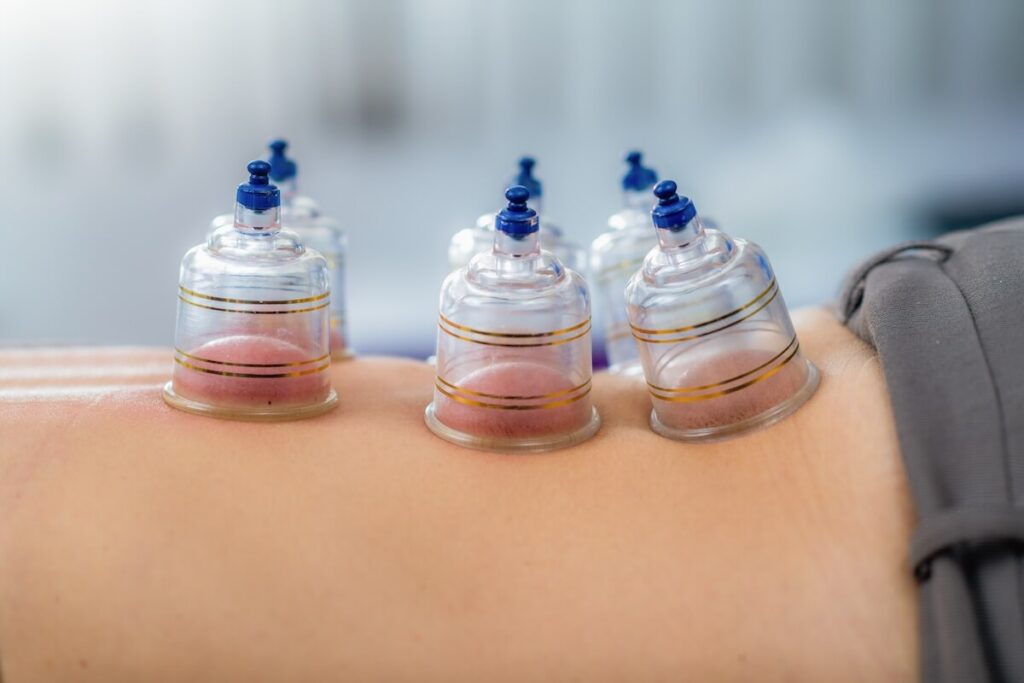
Cupping marks are the circular discolorations left on the skin after treatment. They are caused by blood drawn to the surface through the suction process — not by tissue damage. Darker marks (deep red or purple) typically indicate areas with more chronic tension, restricted blood flow, or fascial stagnation. Lighter marks (pink or faint red) suggest healthier underlying circulation.
Notably, cupping marks are not bruises. Bruises result from trauma that damages capillaries. Cupping marks result from intentional blood draw to the surface without tissue injury. Most marks fade within 5 to 10 days, and the discoloration typically decreases with subsequent treatments as tissue health improves.
Aftercare recommendations
After a cupping session, patients should stay hydrated, avoid intense exercise for 12 to 24 hours, and keep the treated area warm. Avoiding alcohol and very hot showers immediately after treatment helps the body process the increased circulation effectively. Our team provides specific aftercare instructions tailored to each patient’s treatment plan.
Side effects and safety considerations
Common after-effects include temporary skin discoloration, mild soreness at the treatment site, and occasional skin sensitivity. Serious adverse effects are rare when cupping is performed by licensed providers. Cupping is generally not recommended over areas of broken skin, active skin infections, sunburn, or for patients on anticoagulant medications without physician clearance. The Mayo Clinic notes that cupping is considered safe for most adults when performed correctly.
Who benefits most from cupping therapy?
Cupping therapy is effective for a broad range of patients and conditions. Based on the cases we treat most frequently at The Spine & Health Center, these are the patient populations and conditions where cupping produces the strongest results:
| Patient / Condition | How cupping helps | Often combined with |
|---|---|---|
| Chronic back pain | Releases paraspinal and gluteal muscle tension driving spinal stiffness | Chiropractic adjustments |
| Sciatica | Decompresses piriformis and posterior hip tissue compressing the nerve | PT core strengthening |
| Neck pain / headaches | Releases upper trapezius and cervical fascial restrictions | Cervicogenic headache treatment |
| Athletes / sports recovery | Reduces DOMS, improves tissue quality, accelerates recovery | Sports performance program |
| Post-surgical patients | Breaks down scar tissue adhesions and restores tissue mobility | Post-operative rehab |
| Desk workers | Addresses postural muscle imbalances from prolonged sitting | Ergonomic correction program |
| Shoulder injuries | Releases rotator cuff tension and improves glenohumeral mobility | Active Release Technique (ART) |
| Fibromyalgia | Reduces widespread myofascial pain and improves sleep quality | Fibromyalgia care program |
Cupping therapy at The Spine & Health Center of New Jersey
What distinguishes our cupping therapy program from standalone cupping services is integration. Cupping at The Spine & Health Center is never performed in isolation — it’s built into a coordinated care plan alongside chiropractic adjustments, physical therapy exercises, and advanced modalities selected for your specific condition.
Advanced modalities that complement cupping
Class IV laser therapy
Photobiomodulation that reduces inflammation at the cellular level. When layered after cupping, laser therapy accelerates the healing response in tissue that has been decompressed and flooded with fresh blood flow.
Shockwave therapy
Acoustic wave technology that stimulates tissue regeneration. Particularly effective for chronic tendon issues and stubborn myofascial adhesions that cupping alone may not fully resolve.
Acupuncture
Targets pain signaling, reduces stress and anxiety, and complements cupping's tissue-level effects with nervous system regulation.
Explore our modalities: Class IV Laser | Shockwave Therapy | Graston Technique | FAKTR | Trigenics | Blood Flow Restriction | NormaTec Boots | Fascial Manipulation
Three Bergen County locations
Cupping therapy is available at all three of our offices, each staffed with providers trained in both chiropractic and physical therapy cupping techniques:
140 Closter Dock Rd, Suite A, Closter, NJ 07624. Serving Closter, Alpine, Demarest, Norwood, and Northvale.
170 Kinderkamack Rd, Park Ridge, NJ 07656. Serving Park Ridge, Woodcliff Lake, Hillsdale, and River Vale.
37 N Kinderkamack Rd, Montvale, NJ 07645. Serving Montvale, Upper Saddle River, Saddle River, and Ramsey.
New Jersey allows direct access to physical therapy — no referral is needed to start treatment. Most major insurance plans cover cupping when performed as part of a physical therapy or chiropractic visit. Visit our insurance page for coverage details.
Frequently asked questions
What are the main benefits of cupping therapy?
Cupping therapy benefits include reduced muscle tension, improved blood flow, faster post-exercise recovery, decreased inflammation, and myofascial release. It is used to treat back pain, neck pain, sciatica, sports injuries, and chronic muscle tightness. Research published through the National Institutes of Health supports its effectiveness for musculoskeletal pain relief.
Does cupping therapy actually work?
Yes. Multiple systematic reviews, including studies indexed in PubMed and the NCCIH, show that cupping therapy produces measurable improvements in pain, range of motion, and tissue healing. It is most effective when combined with other treatments like chiropractic adjustments and physical therapy exercises — which is how we deliver it at The Spine & Health Center.
What does cupping therapy do for your body?
Cupping creates negative pressure that lifts skin and fascia away from underlying muscle, increasing blood flow to the area, releasing fascial adhesions, and stimulating the body’s natural healing response. This process reduces muscle stiffness, promotes lymphatic drainage, and accelerates recovery from both acute injuries and chronic tension.
Is cupping therapy good for back pain and sciatica?
Cupping therapy is frequently used for back pain and sciatica. It addresses muscular tightness and fascial restrictions that contribute to lower back stiffness and sciatic nerve irritation. At The Spine & Health Center, cupping is combined with chiropractic adjustments and targeted physical therapy exercises for comprehensive relief.
What do the cupping marks mean?
Cupping marks are caused by blood drawn to the surface of the skin during treatment. Darker marks typically indicate areas with more stagnation, restricted blood flow, or chronic muscle tension. Lighter marks suggest healthier tissue circulation. Most cupping marks fade within 5 to 10 days and are not bruises in the traditional sense.
How often should you do cupping therapy?
Most patients benefit from cupping once or twice per week during active treatment, then transitioning to monthly maintenance. Your provider will adjust frequency based on your condition and response. At The Spine & Health Center, cupping is coordinated with chiropractic and physical therapy visits for optimal scheduling.
Are there side effects or risks with cupping therapy?
Cupping therapy is considered safe when performed by a trained provider. Common after-effects include temporary skin discoloration, mild soreness, and occasional skin sensitivity. Serious side effects are rare. Cupping is not recommended over broken skin, active inflammation, or for patients on blood-thinning medications without medical clearance.
Can I get cupping therapy in Bergen County, NJ?
Yes. The Spine & Health Center offers cupping therapy at all three Bergen County locations — Closter, Park Ridge, and Montvale. Cupping is integrated into personalized treatment plans alongside chiropractic care, physical therapy, acupuncture, and advanced modalities like Class IV laser and shockwave therapy.
Ready to experience cupping therapy benefits for yourself?
Our Bergen County team will evaluate your condition and build a treatment plan that integrates cupping with chiropractic care, physical therapy, and advanced modalities — tailored to what your body actually needs.
- Closter: 31 Vervalen St, Closter, NJ 07624
- Park Ridge: 146 Kinderkamack Rd, Park Ridge, NJ 07656
- Montvale: 32 Philips Pkwy, Montvale, NJ 07645
Disclaimer: This blog post is for informational purposes only and does not constitute medical advice. If you are experiencing pain, consult a qualified healthcare professional for a personalized evaluation.